Choosing the right heavy duty pallet racks is rarely a simple price comparison. Global buyers must evaluate load capacity, warehouse conditions, handling equipment, and local installation requirements. A rack that performs well in a dry European warehouse may need different protection in a humid coastal facility.
This guide introduces practical options for demanding storage environments. It focuses on upright strength, beam design, frame depth, anchoring, corrosion resistance, and safe forklift clearance. It also considers common pallet sizes, loading patterns, warehouse height, and future expansion. Small details matter. A bent beam is not a minor inconvenience. It may signal overloading, impact damage, or poor inspection routines.
Reliable purchasing should begin with verified load data and clear technical drawings. Buyers should request material specifications, testing records, warranty terms, and installation guidance from established manufacturers. Regional standards may differ, so professional engineering review remains valuable, especially in seismic or high-wind areas. Certifications can support confidence, but they should not replace practical verification.
No rack is perfect. A strong system can still fail when pallets are damaged or forklifts operate carelessly. Even experienced teams may underestimate aisle width or changing inventory weights. That is why this overview compares performance, durability, safety features, and total ownership value rather than focusing only on the lowest quote. The goal is a clearer buying decision, supported by realistic warehouse experience and measurable evidence.
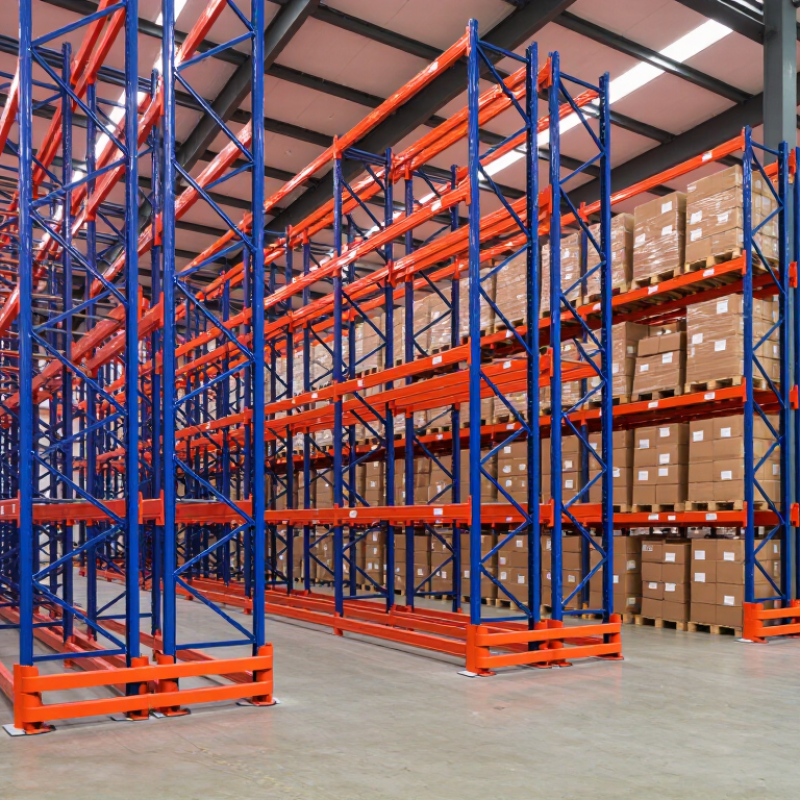
A heavy-duty pallet rack system is more than thick steel and a high load rating. It is an engineered storage structure for demanding warehouse conditions. Its strength depends on upright frames, horizontal beams, bracing, connectors, and floor anchoring working together. Each level should display a clearly calculated capacity, not an optimistic estimate. Load weight, pallet size, forklift movement, and building height all influence the design.
Reliable systems also manage repeated impact and daily adjustments. Uprights need protection near busy aisles. Beams should lock securely and resist accidental lifting. The floor must support the combined rack and pallet loads without excessive settlement. In earthquake-prone or humid regions, local engineering requirements may change the specification. A practical inspection checks bent frames, loose connections, uneven pallets, and damaged anchors. Small defects matter. No design is perfect, and overloaded storage can expose that weakness quickly.
Tips: Confirm real pallet weights before ordering. Request stamped load calculations from a qualified engineer. Leave enough aisle width for the actual forklift, not the smallest model. Use row spacers, guards, and clear capacity signs. Photograph damaged components during inspections. Replace questionable parts instead of straightening them casually. Review the layout when inventory changes, because yesterday’s safe configuration may not fit tomorrow’s loads.

Selective pallet racks generally provide the highest pallet-position capacity and the most direct access to every load. Drive-in, double-deep, push-back, and pallet-flow systems can also support heavy loads, but their final rating depends on beam span, upright height, pallet dimensions, seismic requirements, and the specified steel design.
Data shown represents common industry design ranges and representative rated capacities for comparison only. A qualified rack engineer must verify the final load rating for each project.
Heavy-duty pallet racks must match warehouse movement, not just maximum load. Selective pallet racking offers direct access to every pallet and suits mixed stock. It usually needs wider aisles, however. Double-deep racks improve storage density but require compatible forklifts and stricter inventory control. Drive-in racking stores similar products efficiently, though last-in, first-out rotation can create aging stock.
Push-back racks use nested carts for high-density storage and better selectivity. Pallet-flow racks support first-in, first-out movement through rollers, making them suitable for dated goods. Cantilever racks serve long materials, such as steel sections, timber, and pipes.
According to ANSI MH16.1 and RMI guidance, rack design must consider load capacity, beam deflection, frame stability, anchors, and local seismic conditions. A heavier beam does not automatically create a safer system.
The MHI 2024 Annual Industry Report reported that 55% of supply-chain professionals planned to increase technology investment. That pressure often encourages denser storage. Density is not always efficiency. Global buyers should verify pallet dimensions, forklift turning radius, floor capacity, corrosion exposure, and replacement-part availability. In practical audits, damaged uprights near aisle corners remain a common weakness. Guarding helps, but driver training and inspections matter more than many projects admit. Product turnover assumptions also deserve review; a rack selected for fast-moving inventory may perform poorly when demand changes.
Capacity evaluation starts with real operating conditions, not the advertised maximum. Record the pallet weight, beam levels, forklift impact, load distribution, and future growth. ANSI MH16.1-2023 guidance emphasizes that rack capacity depends on the complete configuration, including frames, beams, connectors, and anchors.
A 2,000-kilogram pallet may exceed a beam rating after uneven loading. Leave practical reserve capacity.
More is safer.
Material selection should match corrosion, temperature, and handling conditions. High-strength structural steel can support demanding loads, but weld quality and coating consistency still matter.
The RMI specification requires capacity information to be visible and traceable on rack systems. Buyers should request mill certificates, load tables, inspection records, and installation drawings.
A glossy finish proves little.
Safety deserves independent verification. The U.S. Bureau of Labor Statistics reported 4.8 recordable cases per 100 full-time workers in transportation and warehousing during 2023, above the private-industry average.
That figure is not a rack-only statistic, but it shows the sector’s exposure.
Include aisle clearance, floor strength, upright protection, and scheduled inspections. One overlooked bent frame can change the whole risk profile.
I would also challenge the spreadsheet: it may assume perfect pallets, centered loads, and careful drivers. Warehouses rarely behave so politely.
Top Heavy Duty Pallet Racks for Global Buyers?
International Standards for Heavy-Duty Pallet Rack Selection
Selecting heavy-duty pallet racks for international projects requires more than comparing steel thickness and price. Buyers should review EN 15512 for structural design, EN 15629 for system specifications, and EN 15635 for safe use and maintenance. In the United States, local engineering rules and RMI MH16.1 may apply. Australian projects may follow AS 4084. These references are not interchangeable.
Start with the real operating conditions. Confirm pallet weight, load height, beam span, forklift type, aisle width, and daily impact risk. Check the concrete slab before installation. A rack can meet its design load yet overload a weak floor. Seismic demands also matter in earthquake-prone regions. Sprinkler clearance and fire access should be coordinated with the building’s safety design.
Details matter.
Each bay should display a clear load notice. Uprights need protection near forklift routes, especially at corners and aisle ends. Regular inspections should record bent frames, loose anchors, missing safety pins, and damaged beams. In practical warehouse reviews, one common mistake is trusting a catalogue capacity without checking actual pallet dimensions. That shortcut feels efficient, but it can create unstable overhangs. I would also question any specification that ignores local codes, installation tolerances, or future load changes. A qualified structural engineer should verify the final layout for the destination country and site conditions.
| Selection Dimension | Typical Heavy-Duty Range or Requirement | International Reference | What Global Buyers Should Verify |
|---|---|---|---|
| Rack Configuration | Adjustable pallet racking is commonly selected for mixed pallet sizes and changing inventory profiles. | EN 15629; ANSI/RMI MH16.1 | Confirm whether the system is designed as selective, drive-in, double-deep, or another configuration. |
| Typical Pallet Load | Approximately 500–2,000 kg per pallet position, depending on beam span, pallet quality, and design. | EN 15512; RMI design provisions | Require a written load chart showing permissible load per level and per bay. |
| Beam Span | Common pallet-rack beam lengths are about 1,800–3,600 mm; longer spans require additional engineering review. | EN 15512; EN 15629 | Match the clear beam length to the pallet width, overhang allowance, and required number of pallets per level. |
| Upright Frame Height | Typical warehouse frames range from approximately 2,400 mm to more than 12,000 mm. | EN 15629; EN 15512 | Check building height, sprinkler clearance, seismic conditions, forklift reach, and required vertical levels. |
| Frame Depth | Common frame depths are approximately 900–1,200 mm for standard pallets, subject to pallet dimensions. | EN 15629; ISO 6780 | Allow adequate pallet support, rear clearance, and any required flue or fire-protection space. |
| Pallet Compatibility | Common pallet footprints include 1,200 × 800 mm and 1,200 × 1,000 mm; North American operations often use 48 × 40 in pallets. | ISO 6780 | Verify pallet entry direction, bottom-board layout, pallet condition, and load stability before finalizing beam spacing. |
| Steel Grade and Material Traceability | Structural components should have documented material properties and traceable production records. | EN 15512; EN 15635; applicable local structural codes | Request material certificates, component specifications, welding or forming controls, and quality inspection records. |
| Load Safety Factor | The design must account for static load, impact, imperfections, connection behavior, and stability rather than relying only on nominal steel strength. | EN 15512; ANSI/RMI MH16.1 | Obtain calculations prepared for the actual bay geometry, load case, support conditions, and operating environment. |
| Seismic Design | Required in regions where local building codes classify warehouse seismic demand as applicable. | EN 16681; ASCE 7; local seismic building codes | Provide site location, soil or seismic parameters, anchorage requirements, and local approval criteria. |
| Floor and Anchorage Requirements | Racks require a suitable industrial floor and engineered anchorage, especially for tall or heavily loaded frames. | EN 15629; EN 15635; local concrete and anchorage codes | Check slab thickness, concrete strength, levelness, anchor type, edge distances, and base-plate reactions. |
| Forklift Operating Clearance | Aisle width depends on forklift type, turning radius, pallet dimensions, lift height, and operator practice. | EN 15629; ISO 3691-1; local workplace-safety rules | Use the forklift manufacturer’s turning and aisle data instead of applying a universal aisle dimension. |
| Protection Components | Column guards, end-of-aisle barriers, row spacers, pallet supports, and safety pins may be required by the layout and risk assessment. | EN 15635; FEM guidance; local safety requirements | Specify impact exposure, guard dimensions, beam locking devices, and replacement procedures for damaged parts. |
| Corrosion Protection | Powder coating or other protective finishes are common in dry warehouses; galvanized or specialist finishes may suit damp or corrosive areas. | ISO 12944; EN 15629 | Match the coating system to humidity, salt exposure, temperature, chemicals, and cleaning methods. |
| Fire Protection Interface | Rack layout, flue spaces, pallet materials, commodity classification, and sprinkler type must be assessed together. | NFPA 13; EN 12845; local fire codes | Obtain approval from the fire-protection designer before changing rack height, storage arrangement, or flue spacing. |
| Inspection and Maintenance | Racks should receive routine visual checks and documented expert inspections at intervals defined by risk and local rules. | EN 15635; local occupational-safety regulations | Require inspection tags, damage-reporting procedures, repair criteria, and accessible replacement components. |
| Documentation Package | A complete package should include drawings, load signs, calculations, installation instructions, inspection guidance, and certificates. | EN 15629; EN 15635; ANSI/RMI MH16.1 | Confirm that documents are supplied in the required language and reflect the final installed configuration. |
Note: Capacity, dimensions, anchorage, seismic detailing, fire protection, and inspection frequency must be confirmed by a qualified designer against the applicable local code and the actual warehouse conditions.
Heavy-duty pallet racks should match pallet weight, beam span, forklift clearance, and building conditions. ANSI MH16.1-2023 provides structural guidance for industrial steel storage racks. However, a perfect drawing can still fail on an uneven floor. Installers should verify slab strength, aisle width, verticality, and anchor depth before loading. Each bay needs visible load information. Missing labels create avoidable risk.
Maintenance requires discipline, not occasional cleaning. EN 15635 recommends regular user inspections and expert inspections at least every twelve months. Workers should check bent uprights, loose anchors, damaged beams, missing locking pins, and overloaded positions. Any damaged frame should be isolated immediately. Small dents matter. A rushed repair may hide a larger alignment problem.
Export planning begins before production. UNCTAD’s Review of Maritime Transport 2023 states that more than 80% of global merchandise trade by volume moves by sea. Buyers should confirm container height, bundle dimensions, corrosion protection, packing marks, and unloading equipment. Galvanized or coated components can help in humid routes, but coating alone cannot prevent damage from poor packing. Include assembly drawings, bolt lists, inspection records, and clear translation for the destination market. Local seismic, fire, and workplace rules may differ. A rack that passes factory inspection still needs local approval and competent installation. That detail is often underestimated.