What Is the Best Pallet Storage System in China?
Choosing the best pallet storage system in China is not a simple equipment comparison. It is an operational decision.
China’s warehouses face uneven demand, dense urban sites, varied pallet sizes, and rapid SKU changes. A system that works in Shenzhen may fail in Chengdu. Local climate, floor loading, forklift routes, and fire-safety planning also influence the result.
The MHI 2024 Annual Industry Report found that 91% of supply chain professionals planned technology investment within five years. The same report identified robotics and automation as major investment priorities. These figures support automated storage and retrieval systems, shuttle systems, and warehouse management software. However, automation is not automatically better. A low-volume facility may gain more from selective pallet racking and disciplined slotting.
CBRE’s China Logistics Property reports continue to highlight demand for modern, efficient logistics facilities. Space efficiency matters, especially near major consumption centers. Drive-in racking can store many identical pallets in limited space. Selective racking provides faster access when product variety is high. Shuttle racking may balance density and flexibility.
Martin Christopher, a leading supply-chain scholar, wrote, “Supply chains compete, not companies.” That principle applies directly to pallet storage. The rack supports the network, but it cannot repair poor forecasting.
A practical assessment should measure pallet turnover, access frequency, SKU diversity, labor cost, and expansion plans. For example, a cold-chain warehouse may need corrosion-resistant components and reliable temperature-compatible equipment. A fast-moving e-commerce site may prioritize short travel distances.
There is no universal winner. That assumption is risky.
The best pallet storage solution in China is the one that matches real inventory behavior, available space, safety requirements, and measurable return on investment. Even careful recommendations need review after six months of operating data.
What Is a Pallet Storage System?
What Is the Best Pallet Storage System in China?
What Is a Pallet Storage System?
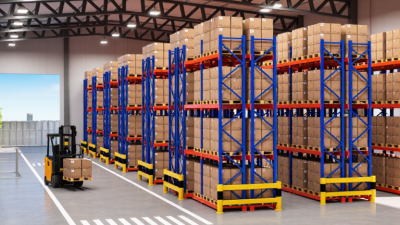
A pallet storage system is a warehouse structure designed to hold palletized goods safely and accessibly. It uses vertical space instead of spreading products across the floor. Common designs include selective racks, drive-in racks, push-back racks, and pallet flow systems.
Each option serves a different operating pattern. Selective racks provide direct access to every pallet, which suits warehouses with many product types. Drive-in systems store more pallets in a smaller area, but they offer less product rotation flexibility. Push-back racks support deeper storage lanes, while pallet flow systems help goods move through gravity-fed channels.
The right choice depends on inventory turnover, pallet size, ceiling height, aisle width, and handling equipment. In a busy Chinese warehouse, even a small aisle change can affect daily travel distance and labor time. Load weight also matters. Uprights, beams, floor strength, and safety guards must match the actual operating conditions.
No system is perfect. A design may look efficient on paper but create delays during peak receiving hours. Dust, uneven floors, and changing product sizes can also reduce performance. A practical assessment should include site measurements, loading tests, inspection access, and future expansion space. Clear labels and regular checks help prevent misplaced pallets and damaged components. Safety should remain visible at every level.
What Is the Best Pallet Storage System in China?
What Is a Pallet Storage System?
A pallet storage system is a warehouse racking solution designed to store, organize, and retrieve palletized goods. The best option depends on pallet dimensions, inventory turnover, required selectivity, available floor space, and material-handling equipment.
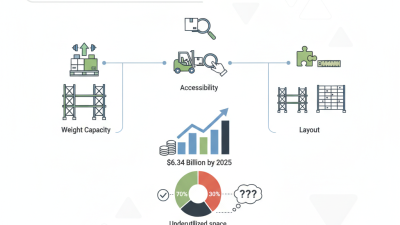
The chart compares common pallet footprints used in China and international logistics. A 1200 × 1000 mm pallet is widely used in China and occupies 1.20 m². Selective pallet racking is suitable when direct access to every pallet is important, while drive-in, double-deep, and mobile systems can improve space utilization when inventory access requirements are lower.
Footprint calculations are based on nominal pallet dimensions referenced by common Chinese and international pallet standards, including GB/T 2934 and ISO 6780.
How Pallet Storage Systems Work in China
China’s pallet storage systems work by matching storage density, product turnover, and handling equipment. A typical warehouse receives pallets, scans their codes, and assigns locations through a warehouse management system. Forklifts then place pallets into selective racks, drive-in lanes, shuttle racks, or automated storage systems. Selective racking supports many product varieties. Drive-in storage saves aisles but suits fewer stock-keeping units. Automated systems improve repeatable movement, though they demand accurate data and maintenance.
Demand is significant. The National Bureau of Statistics reported RMB13.02 trillion in online retail sales of physical goods in 2023, increasing pressure on fulfillment speed. The China Federation of Logistics and Purchasing recorded total social logistics value of RMB352.4 trillion that year, up 5.2%. These figures help explain China’s mix of dense storage and fast retrieval. A pallet may arrive in the morning, enter a high-bay location, and leave hours later for store replenishment. Small delays can become costly.
In practice, there is no single best system. A cold-storage site may favor dense shuttle lanes, while a spare-parts warehouse needs direct access. Floor loading, fire protection, pallet quality, and local operating habits also matter. A polished layout can still fail when pallets are damaged or barcodes are missed. That lesson is easy to underestimate. Regular inspections, slotting reviews, and manual exception checks remain necessary, even in highly automated facilities.
How to Compare Pallet Storage Systems for Your Warehouse
What Is the Best Pallet Storage System in China?
How to Compare Pallet Storage Systems for Your Warehouse
Choosing the best pallet storage system in China starts with warehouse data, not attractive equipment photos. Measure pallet size, unit load weight, daily movements, storage height, and available aisle width. A site handling many SKUs often needs selective pallet racking for direct access. A facility storing fewer products in large batches may gain better density from drive-in or shuttle systems.
Compare each option by storage density, access speed, labor requirements, and future flexibility. For example, narrow aisles can increase capacity, but they may require suitable handling equipment and stricter traffic control. High-density systems can reduce travel distance, yet they may complicate stock rotation when product demand changes. Check first-in, first-out needs carefully. Small errors become expensive.
Safety deserves equal attention. Review floor capacity, rack protection, fire clearance, seismic conditions, and local installation standards with a qualified engineer. Ask for load calculations, inspection records, and maintenance procedures. On site, watch how operators turn at aisle ends and place pallets at the upper levels. These details reveal practical problems that drawings may miss. I have seen warehouses choose maximum density, then lose productivity because replenishment became slow. The “best” system is not always the fullest one. Recheck the design after observing a normal working shift.
How to Choose the Best Pallet Storage System in China
How to Choose the Best Pallet Storage System in China
Choosing the best pallet storage system in China starts with warehouse data, not catalog pictures. Measure pallet dimensions, gross weight, SKU count, daily in-and-out volume, and clear height. The China Federation of Logistics and Purchasing reported that social logistics costs reached 14.4% of GDP in 2023. Even small storage errors can therefore affect operating costs. Select racks around real workflow. A dense system may save floor space. It may also slow forklift movement.
Match the structure to pallet turnover. Selective racking suits many SKUs and direct access. Drive-in storage supports fewer SKUs with larger batches. Automated systems can improve consistency, but they require stable pallets, accurate inventory data, and dependable maintenance.
The 2024 MHI Annual Industry Report indicates that roughly four in five respondents expect robotics and automation adoption within five years. That forecast is useful, but it is not a reason to automate every warehouse.
Test one aisle with actual pallets and forklifts. Check beam deflection, aisle clearance, loading noise, and retrieval time. I would also verify floor capacity, fire protection, seismic design, inspection records, and local technical support. Some plans look perfect on paper. They still fail when operators work under pressure.