10 Tips for Choosing Heavy Duty Pallet Racks

Choosing heavy duty pallet racks is not simply a matter of selecting the tallest frames or the lowest price. Storage conditions, pallet dimensions, forklift movement, floor quality, and expected load weight must work together. A rack may look strong while failing to suit daily operations. That detail is easy to miss.

This guide presents ten practical tips for evaluating heavy duty pallet racks with greater confidence. It considers load capacity, beam levels, upright protection, aisle width, anchoring, inspections, and future expansion. These points reflect common warehouse planning practices and the lessons learned from real installation challenges. Measure twice.

Reliable decisions begin with accurate information. Confirm the heaviest pallet, not the average one. Check whether product weight changes during seasonal demand. Review manufacturer specifications, installation guidance, and qualified engineering advice before placing an order. Local safety requirements also deserve careful attention.

Even experienced teams can overlook uneven floors, damaged frames, or poorly positioned sprinklers. We may assume an existing layout is efficient because it has worked for years. That assumption deserves review. A short site assessment can reveal blocked travel paths, wasted vertical space, or unsafe loading habits. Small observations matter.

The right system should support productivity without creating unnecessary risk. It should remain practical when workers are busy, pallets vary, and equipment moves quickly. Use these tips as a disciplined starting point, then adapt them to your facility’s measured conditions. No rack choice should rely on appearance alone.
10 Tips for Choosing Heavy Duty Pallet Racks

Define Your Load Requirements and Storage Goals

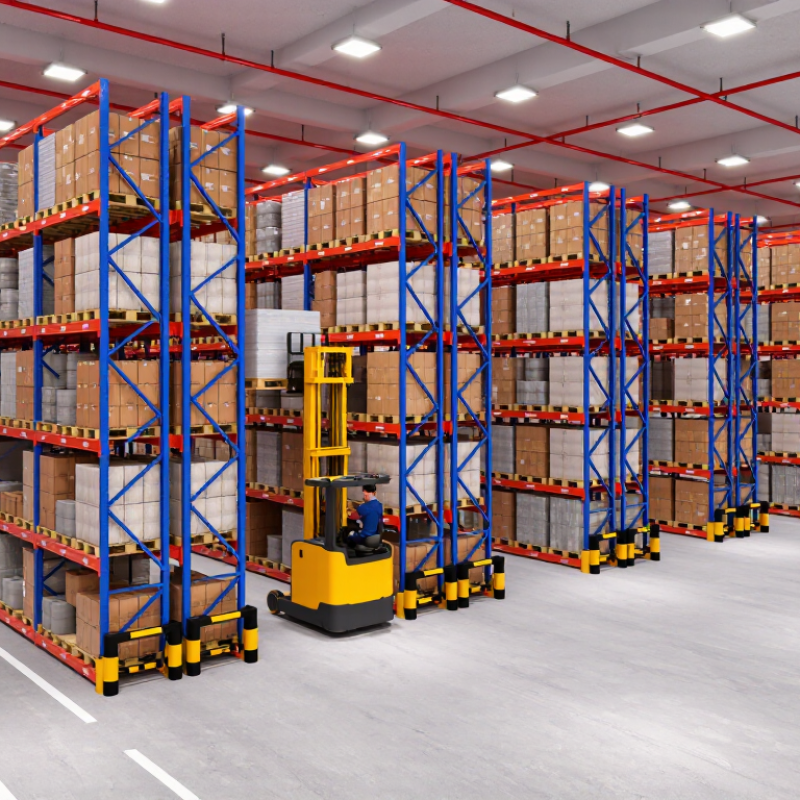
Before choosing heavy duty pallet racks, define what they must carry and how your warehouse will operate. Record each pallet’s weight, height, width, depth, and load type. Include uneven loads, liquid containers, and products with shifting centers of gravity. A pallet weighing 1,800 kilograms may need different support than several smaller pallets with the same total weight. Measure twice.

Tip 1: Set the maximum load per beam level, not just the total bay capacity. Confirm the required capacity with qualified rack professionals and follow the supplier’s tested specifications. Tip 2: Map your storage goals beside your load data. Decide whether you need fast picking, high-density storage, seasonal flexibility, or wider forklift aisles. A taller rack may increase capacity, but it can reduce visibility and complicate safe handling.

Leave space for real movement. Forklifts need clear approach paths, turning room, and enough overhead clearance. Consider future inventory growth, but avoid buying capacity that blocks efficient operations today. I once underestimated product variation and found that a “standard” pallet rarely stayed standard. That planning mistake affected aisle use and labor time. Tip 3: Review your plan with warehouse staff, maintenance personnel, and a qualified inspector. They often notice daily risks that drawings miss. Recheck the layout after a trial installation, especially when pallet dimensions or handling equipment change.

10 Tips for Choosing Heavy Duty Pallet Racks: Define Your Load Requirements and Storage Goals

Pallet footprint is a key starting point for rack planning. Compare the floor area of common standardized pallet formats, then confirm pallet weight, load distribution, clearances, beam capacity, and required selectivity before choosing a rack system.

Footprint values are calculated from the listed pallet dimensions. Pallet standards define size, not a universal safe load rating; always use the actual gross load and a qualified rack engineer’s capacity calculations for final design.

Check Rack Capacity, Dimensions, and Weight Ratings

10 Tips for Choosing Heavy Duty Pallet Racks

Capacity checks should begin with the pallet, not the rack catalog. Record each pallet’s loaded weight, height, width, and depth. Add the heaviest expected load, not the average one. ANSI MH16.1-2023 limits beam deflection to L/180 under a uniformly distributed load. For a 96-inch beam, that equals about 0.53 inches. Excessive bending signals an unsuitable design. MHI’s 2024 Annual Industry Report found that 55% of respondents planned greater investment in robotics and automation. Automation increases the need for consistent rack dimensions and predictable load placement.

Measure clear aisle width, ceiling height, sprinkler clearance, and forklift turning space. A rack may fit the floor plan but fail during daily handling. Leave space for pallet overhang and damaged pallets.

Check upright frames, beam lengths, connector details, and floor anchoring. Each beam level needs a clearly stated capacity. The total bay capacity is not automatically the sum of every visible beam rating. Small labels matter.

Weight ratings can be misunderstood. Dynamic forklift impacts are different from static storage loads. Ask for engineering calculations, test documentation, and installation requirements. Verify whether ratings assume evenly distributed pallets. They often do.

One unevenly loaded pallet can change the risk. I would also recheck old measurements; warehouse layouts rarely remain perfect.

A 2023 industry safety report from the Rack Manufacturers Institute emphasizes inspection and prompt correction of damaged components. That advice is easy to overlook. It should not be.

Choose the Right Rack Configuration and Materials

10 Tips for Choosing Heavy Duty Pallet Racks

Tip 1: Match the configuration to inventory movement. Selective racks suit many SKUs and direct access. Double-deep storage improves density, but it reduces immediate access. Drive-in systems fit uniform pallets with limited rotation. Choose carefully. Tip 2: Measure clear height, aisle width, pallet dimensions, and forklift turning space before ordering. A small measurement error can reduce usable capacity.

Tip 3: Specify the real load, not an ideal estimate. Include pallet weight, stack height, beam spacing, and impact exposure. MHI’s 2024 Annual Industry Report found that 55% of respondents planned to increase supply-chain technology investment. That trend makes adaptable rack layouts more valuable. Tip 4: Use structural steel with verified yield strength and documented load ratings. Painted steel works in dry warehouses. Galvanized components perform better in humid or corrosive areas. Tip 5: Add wire decking where loose cartons or split pallets create falling-object risks. It is a practical detail, though not a substitute for disciplined loading.

Tip 6: Check seismic, wind, and floor conditions with a qualified engineer. OSHA guidance emphasizes inspecting damaged storage equipment and removing unsafe components from service. Tip 7: Leave required flue spaces and sprinkler clearances. Tip 8: Protect end frames with guards. Tip 9: Choose adjustable beams for changing pallet profiles. Tip 10: Review the design annually. I would not assume the first layout remains efficient. CBRE’s 2024 industrial and logistics research highlights operational efficiency as a continuing occupier priority, yet dense storage can slow picking when travel paths are ignored. That trade-off deserves a real-world trial.

10 Tips for Choosing Heavy Duty Pallet Racks - Choose the Right Rack Configuration and Materials

Tip Selection Dimension Recommended Choice Typical Data and Specifications Important Consideration
1 Determine the Required Load Capacity Select a rack system based on the total pallet load and the number of pallet positions per beam level. Common heavy-duty beam capacities range from approximately 2,000 to 6,000 lb per beam level, depending on beam length, profile, and support design. The rated capacity must be greater than the actual uniformly distributed load. Never estimate capacity from appearance alone.
2 Choose the Correct Rack Configuration Use selective pallet racks for direct access to every pallet; consider double-deep, drive-in, push-back, or pallet-flow systems for higher storage density. Selective racks generally provide access to 100% of stored pallet positions. High-density systems can reduce aisle requirements but may reduce selectivity. Match the configuration to inventory turnover. Fast-moving or varied products usually benefit from direct-access storage.
3 Verify Pallet and Load Dimensions Measure pallet length, width, height, weight, overhang, and load stability before setting beam spacing. A common pallet footprint is 48 × 40 in. Beam length and frame depth must provide suitable clearance without allowing excessive pallet overhang. Allow operating clearance between adjacent loads, uprights, and building obstructions. Irregular loads may require wider bays or special supports.
4 Select Suitable Upright and Beam Materials Use formed structural steel with corrosion protection for standard indoor storage; choose galvanized or coated finishes for damp or corrosive environments. Cold-formed steel is widely used for rack frames and beams because it offers high strength-to-weight efficiency. Material thickness and profile shape affect capacity. Finish selection does not replace corrosion control. Moisture, chemicals, temperature, and cleaning methods should be assessed together.
5 Match Rack Height to the Facility Choose the tallest practical rack that remains compatible with clear height, sprinkler protection, lighting, ventilation, and handling equipment. Maintain required vertical clearance above the highest load and below roof, sprinkler, light, and mechanical systems according to applicable local requirements. The building structure and fire-protection layout may limit rack height even when the rack itself is structurally capable of being taller.
6 Plan Aisle Width for Handling Equipment Set aisle width according to the turning radius and operating method of the forklift or reach truck used in the facility. Typical aisles may range from about 8 to 12 ft for many conventional forklift layouts; narrow-aisle equipment can require less space but needs precise control. Use the equipment manufacturer’s minimum aisle recommendation and add practical clearance for pallet condition, operator visibility, and traffic flow.
7 Account for Seismic and Wind Conditions Have the rack system designed or reviewed for local seismic, wind, and building conditions, especially in tall or freestanding installations. Design requirements vary by location, rack height, stored load, anchorage, soil conditions, and building code. Seismic zones may require additional bracing and stronger anchors. Floor anchoring, base plates, frame bracing, and connections should be specified by a qualified design professional where required.
8 Add Impact Protection Install column guards, end-of-aisle barriers, row spacers, and guide rails in areas exposed to forklift traffic. Protection devices should be anchored independently where possible and positioned to intercept common vehicle impact zones without reducing required aisle clearance. Damaged uprights, beams, or braces should be isolated and inspected promptly. Impact protection reduces risk but does not make damaged components safe.
9 Consider Decking and Pallet Supports Use wire decking, bar grating, timber decking, or pallet-support bars when pallet quality, load distribution, or local requirements demand additional support. Decking capacity depends on span, support spacing, material, and load type. Point loads may require stronger or more closely spaced supports than evenly distributed loads. Do not assume decking increases the rated capacity of the entire rack. The lowest-rated component controls the safe working load.
10 Plan for Inspection and Future Expansion Choose a modular system with replaceable components, visible capacity labels, and sufficient clearance for inspections and future bay additions. Inspect racks regularly for bent members, missing locking pins, loose anchors, corrosion, overloaded beams, and changes to the original configuration. Any change in beam level, load type, rack height, or layout should be reviewed before implementation. Follow applicable local codes and workplace-safety rules.

Note: Capacity figures and dimensional ranges are typical planning values, not universal ratings. Final rack selection should be based on load data, equipment specifications, site conditions, and applicable building and workplace-safety requirements.

Evaluate Safety Features, Standards, and Installation Needs

Heavy-duty pallet racks should be judged by safety evidence, not steel thickness alone. Check the rated capacity for each beam level and confirm it matches your pallet weight, dimensions, and loading pattern. Load plaques must be visible from the aisle. Missing labels create uncertainty.

Inspect upright frames for bends, cracked welds, loose connectors, and impact damage near the floor. Safety pins should be fully engaged, while row spacers, column guards, and wire decking should suit the site’s risks. Follow applicable local building, fire, seismic, and workplace standards. Requirements vary by location, so a qualified structural professional should verify the design.

Installation conditions deserve equal attention. Measure the concrete slab, aisle width, ceiling clearance, sprinkler space, and forklift turning radius before ordering. Anchors need the correct type, depth, and torque for the floor. Small errors matter. A rack can appear plumb while carrying uneven forces. Leave damaged components out of service until inspected. It is tempting to save time by reusing bent frames or skipping a final torque check, but that shortcut deserves careful reconsideration. Record inspection dates, repair decisions, and changes in pallet weights for reliable future checks.

Compare Durability, Maintenance, Cost, and Future Expansion

Choosing heavy-duty pallet racks starts with the load, not the catalog photograph. Measure pallet weight, height, beam span, and forklift traffic. Thicker steel may resist bending, but thickness alone does not prove safety. Request tested load ratings, connection details, and installation guidance. Upright frames often collect scrapes like tree bark. Inspect them carefully.

Durability and maintenance should be compared together. Powder-coated surfaces may slow corrosion, while replaceable guards can reduce impact damage.

Every system still needs checks for bent beams, loose anchors, and missing safety pins. Keep inspection records with photographs and dates. It takes minutes.

Small damage can become an expensive shutdown. I have seen teams overvalue heavy components and underestimate aisle discipline.

Cost includes delivery, installation, repairs, inspections, and labor lost during access problems. A cheaper frame may require frequent replacement, while an expensive design may offer little benefit for moderate loads. Reserve space for new bays, taller pallets, or changing products.

Modular beams help, but expansion also depends on floor capacity, sprinkler clearance, and forklift turning space. Forecast growth honestly. My planning has sometimes been too optimistic, so I now compare current utilization with a three-year demand estimate before approving extra capacity.