What Is the Best Push Back Racking System in 2026?

Choosing the best push back racking system in 2026 is less about finding a universal winner and more about matching the system to your inventory, building, and daily workflow. Push back racking stores multiple pallets deep on wheeled carts or inclined rails, helping warehouses increase selectivity compared with some deep-lane storage options. It can suit operations that handle several pallets of the same product and need access from a single aisle. But that advantage depends on the details.

Start with the pallet dimensions and weights, SKU count, turnover, forklift type, and available clear height. A system that works well for uniform loads may perform poorly with inconsistent pallets. Rail design, cart quality, installation, and maintenance also matter. Ask suppliers to explain rated capacities and operating requirements, and have the proposed layout checked against your actual site conditions. Get specifics.

The “best” option should support safe, predictable handling without making replenishment or picking unnecessarily difficult. Compare usable storage capacity, access to each SKU, installation needs, and long-term service support—not just the quoted price. A warehouse walkthrough and a review of representative pallet loads can reveal problems a brochure misses. Still, forecasts are imperfect. Product mix and throughput can change, so leave room to reassess assumptions before committing. This guide examines the key system types, selection criteria, and trade-offs to help you make a grounded decision in 2026.
What Is the Best Push Back Racking System in 2026?

Understanding How Push Back Racking Systems Work

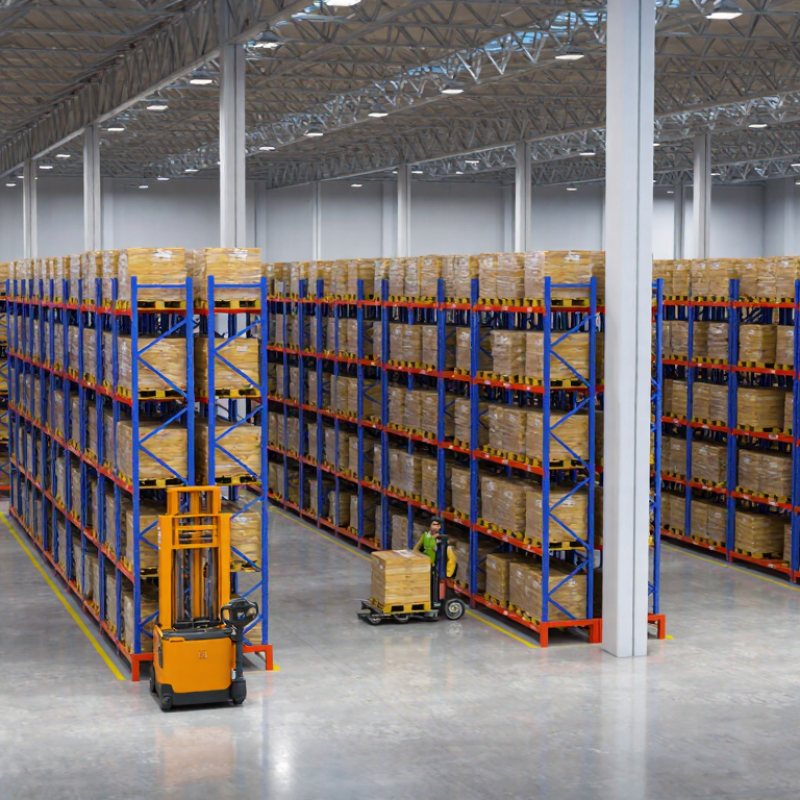
Push-back racking stores pallets on nested carts that travel along slightly inclined rails. A forklift places the first pallet at the front of a lane, then pushes it backward as each new pallet enters. When the operator removes the front pallet, the carts behind it roll forward under gravity. The system follows a last-in, first-out sequence. That matters. It lets a forklift serve several pallets from one aisle face, while keeping each lane suited to a single product or a tightly controlled group.

MHI’s 2024 Annual Industry Report found that 55% of respondents identified supply-chain disruptions as a major challenge. Dense storage can help warehouses use floor space more effectively, but it cannot solve inventory uncertainty by itself. Push-back systems trade some selectivity for storage density.

A worker cannot reach the middle pallet directly. Not quite. Pallet dimensions, load stability, rail capacity, and forklift handling all affect safe operation. A crushed carton or uneven load can snag a cart, so real pallet samples and operating conditions deserve review before installation. The lane may look simple from the aisle; its performance depends on details that are easy to overlook.

Key Features That Define a High-Quality System in 2026

A high-quality push back racking system in 2026 is not simply the one with the greatest stated capacity. It should fit the pallet mix, forklift approach, and daily picking rhythm. That fit begins with accurate load data. Measure pallet width, depth, weight, and overhang before selecting lane dimensions. Small details count.

Nested carts or rollers should move smoothly under load, without binding or sudden jolts. Rails need consistent alignment, and lane stops must hold the front pallet securely. Ask for documented ratings per lane and level, plus a layout showing how loads transfer through the structure. Clear operating limits matter. Operators should know maximum pallet weights and which positions may be loaded. These checks help reduce uneven loading, product damage, and unnecessary forklift adjustments.

Access is another defining feature. Push back storage is dense and last-in, first-out, so it suits products without strict first-in, first-out rotation. Confirm that this rotation works for the inventory. Compare lane depth with order frequency; deeper lanes can save aisle space but complicate replenishment. Installation quality, floor condition, and routine inspections also deserve attention. Even a sound design can disappoint when the floor is uneven or damage goes unreported. Layout assumptions can look tidy on paper and feel awkward once forklifts turn.

Comparing Push Back Racking with Other Storage Methods

Push-back racking suits warehouses that store several pallets of the same SKU and need more density than selective racks provide. Each lane holds pallets on nested carts. A forklift places a new pallet at the front, pushing earlier pallets back; retrieval follows last-in, first-out (LIFO). Fewer aisles can free floor space. But pallets deep in a lane are not individually accessible.

Selective pallet racking offers direct access to every pallet, making it a better fit for many SKUs with uneven demand. The trade-off is wider aisle space and lower storage density. Drive-in racking can store deep blocks of similar products, but forklifts enter the lanes, which calls for careful operating practices. Push-back keeps forklift travel at the aisle face, though its carts and rails need inspection. Small damage matters.

Pallet flow racking uses gravity to move loads toward a picking face, often supporting first-in, first-out (FIFO) handling. That can help with dated inventory, but flow lanes need suitable pallets and reliable product movement. Push-back is usually a stronger match when LIFO is acceptable and replenishment arrives in batches. Still, the neat diagram can mislead. Check pallet condition, load weight, SKU turnover, and actual forklift clearances with a qualified racking professional before choosing; a high-density layout that slows daily picking may not be the best system.

How to Choose a System for Your Warehouse

What Is the Best Push Back Racking System in 2026?
How to Choose a System for Your Warehouse

The best system fits your pallet flow, not just your floor plan. Push-back racking stores multiple pallets deep and suits warehouses handling several pallets per SKU. It uses space efficiently, but access is last-in, first-out. That can be a poor fit for dated goods or fast-changing batches. Check pallet dimensions, weights, and condition; uneven pallets can catch on moving carts. Also confirm forklift compatibility and the clear aisle width required for safe loading.

MHI’s 2024 Annual Industry Report surveyed more than 1,000 supply-chain professionals. It reported that 55% planned to adopt robotics and automation within five years. That trend makes future equipment access worth considering, even if automation is not in your current budget. Compare expected throughput, replenishment frequency, and the cost of lost selectivity. Ask a qualified rack designer to verify load ratings and layout against your actual pallet data. A tidy drawing can still hide a daily bottleneck.

Tips: Measure your most common pallets, then test the largest and least stable ones. Run a small trial lane with your operators and forklifts. Watch for awkward turns, slow retrievals, and cart movement. I would still review the layout after a busy season; real traffic often exposes what planning missed.

What Is the Best Push Back Racking System in 2026? - How to Choose a System for Your Warehouse

There is no single best configuration for every warehouse. The guidance below describes common planning choices; actual capacity, clearances, and equipment requirements must be confirmed through a site-specific rack design.

Configuration or decision factor Typical planning range or operating rule Best suited to Main benefit Key trade-off or check
2-pallet-deep lanes Two pallet positions deep in each lane; access is from the working aisle. Lower quantities per SKU, relatively frequent replenishment, or operations prioritizing simpler access. Less depth to manage within each lane than deeper configurations. Usually provides less storage density than a deeper lane arrangement.
3–4-pallet-deep lanes Three or four pallet positions deep; each lane is generally assigned to one SKU or product batch. Warehouses seeking a balance between storage density and the number of pallets stored per SKU. Can increase pallet positions in the rack footprint compared with shallower lanes. Check that inventory quantities and replenishment patterns suit the lane depth.
5–6-pallet-deep lanes Five or six pallet positions deep; best considered when enough inventory is available to fill and replenish each lane efficiently. High-volume products with relatively stable demand and multiple pallets per SKU. Can provide greater storage density within the rack area. Deeper lanes can reduce selectivity and may increase the time or handling needed to manage replenishment.
Inventory rotation Push-back lanes operate on a last-in, first-out (LIFO) basis: the most recently loaded pallet is normally the first one retrieved. Products for which LIFO rotation is acceptable. Loading and retrieval take place from the same aisle. Choose another storage approach if strict first-in, first-out (FIFO) rotation is required.
SKU and lane assignment Plan lanes around SKU, batch, and pallet quantity; avoid mixing products in a lane unless the operating process controls their identification and retrieval. Operations with predictable quantities and clear replenishment rules. Supports orderly loading and helps reduce product-selection errors. Too many SKUs for the available lanes can create partial lanes and reduce usable capacity.
Pallet and load compatibility Confirm pallet dimensions, condition, load overhang, load stability, and loaded weight against the system design. Any push-back installation. Helps ensure pallets travel and rest correctly on the system’s carts or rails. Do not assume all pallets or loads are compatible; confirm requirements with the rack designer.
Forklift and aisle fit Verify the forklift type, turning and handling clearances, lift height, and pallet approach at the rack face. Facilities choosing between alternative equipment or aisle layouts. Aligns rack operation with the equipment used for loading and retrieval. Aisle width depends on the forklift, load, building layout, and applicable safety requirements; there is no universal value.
Capacity and site design Specify the actual pallet load, rack height, lane depth, floor conditions, and applicable local building and seismic requirements. Project planning, expansion, or replacement of an existing system. Allows the rack and its components to be designed for the site and intended loads. Do not use a generic capacity figure as an allowable rack load; obtain project-specific engineering and installation details.

Installation, Safety, and Long-Term Performance Factors

What Is the Best Push Back Racking System in 2026?

The best push-back rack is one that fits your pallets, product flow, and building—not simply the highest-capacity option. Before installation, confirm pallet dimensions, loaded weights, aisle widths, and the number of pallet positions per lane. Check floor levelness, too; a slight slope can affect cart movement. Have a qualified rack professional verify the layout and anchoring against site conditions and the system’s rated limits. Small details matter.

After installation, train operators to load pallets squarely and keep forks clear of rack frames. Push-back lanes generally suit several pallets of the same product, where last-in, first-out access is acceptable. Inspect carts, rails, connectors, and upright frames regularly, especially after impacts. Record damage and remove affected lanes from use until assessed. I would not treat a quick visual check as a full inspection; hidden wear can be easy to miss. Long-term performance depends on consistent loading, prompt repairs, and keeping capacity labels visible.

Tips: Test a lane with the actual pallet type before full operation. Watch for uneven travel, rubbing, or pallets that stop short. Keep a simple inspection log. It may feel fussy, but it helps reveal recurring problems before they disrupt daily picking.

Choosing Push-Back Racking: Lane-Depth Options

Typical push-back systems are configured for 2–6 pallet positions deep per lane. These are planning configurations, not performance ratings; confirm available depths with a qualified rack designer.

How to choose: Greater lane depth can increase storage density, but push-back racking typically uses last-in, first-out (LIFO) access. Match lane depth to SKU turnover, pallet consistency, load requirements, and available aisle space. Have the installation designed for site conditions, follow applicable safety requirements, and inspect racks regularly to support long-term performance.