What Is Pallet Racking Brisbane and How Does It Work?
Pallet racking Brisbane is a practical storage system for warehouses, workshops, and distribution facilities across Brisbane. It uses upright frames, horizontal beams, and decking to create vertical storage levels. Forklifts place pallets into these levels, while workers retrieve stock from designated aisles. The design looks straightforward. It is not always simple.
Local businesses often need to balance limited floor space, changing inventory, forklift access, and workplace safety. A small warehouse may use selective pallet racking for quick access to individual pallets. A larger operation might consider drive-in, cantilever, or double-deep systems. Each option affects loading speed, storage density, visibility, and daily handling risks.
A reliable pallet racking brisbane solution begins with accurate measurements and realistic load information. Pallet dimensions, beam capacity, ceiling height, aisle width, and forklift turning space all matter. Experienced suppliers should assess the site and recommend equipment suited to its actual conditions. Load plaques should remain visible, and damaged frames or beams should never be ignored.
Installation quality also matters. An attractive rack can still be poorly configured. Regular inspections help identify bent uprights, loose connections, missing safety pins, and uneven loads. Australian workplace requirements and relevant engineering guidance should guide the planning process. However, compliance alone does not guarantee a useful layout.
This guide explains how pallet racking works, where different systems fit, and what Brisbane businesses should consider before installation. It also examines practical limitations, because the cheapest design is not always the most dependable choice.
What Pallet Racking Brisbane Means in Warehouse Storage
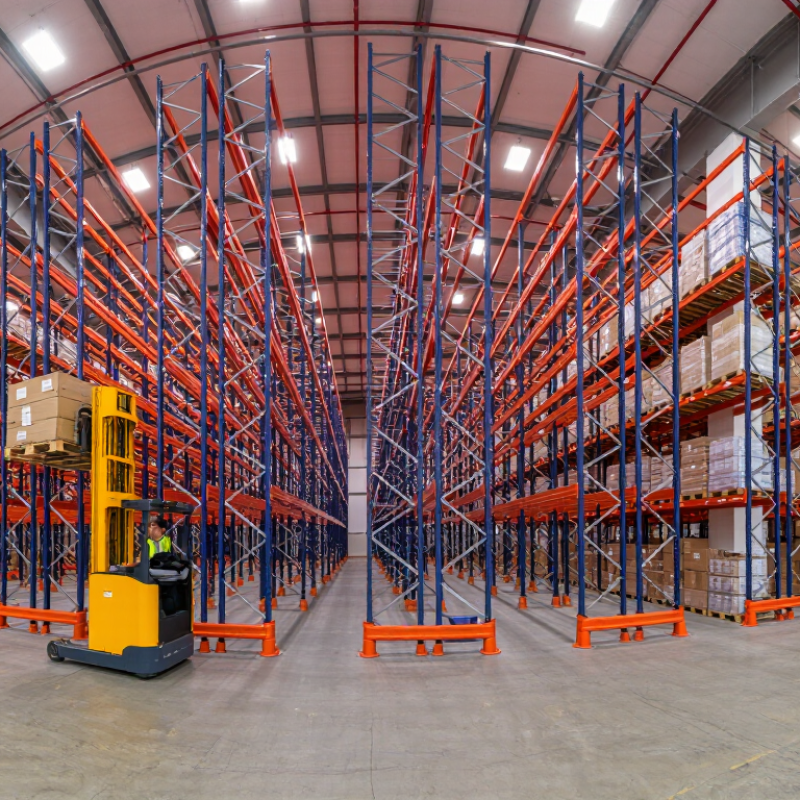
Pallet racking Brisbane means a planned storage system designed for local warehouses, not simply metal shelving. It uses upright frames, horizontal beams, decking, and clearly labelled pallet positions. Forklifts place loads into elevated levels, while workers retrieve stock from accessible aisles. Brisbane’s heat, humidity, concrete floors, and changing inventory can affect the design. A practical assessment should check pallet dimensions, load weights, ceiling height, sprinkler clearance, and forklift turning space.
The 2024 MHI Annual Industry Report found that 83% of supply chain professionals view technology as a competitive advantage. Racking supports this shift when each bay has a defined location and readable identification. Warehouse software can then connect pallet positions with stock records. Small errors matter. One incorrect beam rating can create a serious safety problem. Safe Work Australia identifies transport, postal, and warehousing as industries requiring careful hazard management. This supports regular inspections, damage reporting, and controlled changes.
In Brisbane, operators often begin with selective racking because it provides direct access to every pallet. High-density systems may save floor space, but they can reduce access speed and require stricter loading control. Upright guards protect frames near forklift routes. Load notices show the safe capacity for each level. These details are useful, although not perfect. A layout that works during quiet periods may fail during seasonal peaks. Experienced installers should verify the finished system against engineering requirements and daily warehouse practice.
What Is Pallet Racking Brisbane and How Does It Work? - What Pallet Racking Brisbane Means in Warehouse Storage
| Storage Dimension | Typical Information | How It Works | Warehouse Benefit |
|---|---|---|---|
| Pallet racking definition | A steel storage system designed to hold palletised goods in horizontal levels. | Upright frames support horizontal beams, creating adjustable pallet storage bays. | Uses vertical warehouse space and increases organised storage capacity. |
| Common Brisbane application | Warehouses, distribution centres, logistics facilities, wholesalers and industrial storage sites. | Racking is arranged in rows with access aisles for forklifts or other handling equipment. | Supports practical storage planning for a wide range of warehouse layouts. |
| Typical pallet position | One position generally stores one pallet, although bay configurations may vary. | Beam levels are set at suitable heights for the pallet load and the available lift height. | Makes stock locations easier to count, label, retrieve and replenish. |
| Pallet size reference | Australian warehouses commonly handle standard-sized pallets, including the 1165 mm × 1165 mm Australian pallet. | Bay width and beam length are selected to provide suitable pallet support and clearance. | Improves compatibility between the rack layout, pallets and material-handling equipment. |
| Load capacity | Capacity varies according to upright size, beam length, rack height, pallet spacing and load distribution. | Each system must be designed and rated for the intended unit loads and operating conditions. | Helps prevent overloading and supports safer, more reliable storage operations. |
| Vertical storage levels | The number of levels depends on building height, pallet height, sprinkler clearance and handling equipment. | Additional beam levels can be added when the structure and safety clearances allow it. | Increases cubic storage capacity without expanding the warehouse footprint. |
| Aisle requirements | Aisle width depends on the forklift type, turning radius, pallet dimensions and operating method. | Aisles provide safe access for placing, retrieving and inspecting pallet loads. | Balances storage density with vehicle movement and operator access. |
| Selective pallet racking | A widely used configuration with direct access to every pallet position. | Forklifts approach each bay from the aisle and handle pallets individually. | Provides good stock accessibility and suits warehouses with varied product lines. |
| Drive-in or drive-through racking | High-density storage designed for larger quantities of similar products. | Forklifts enter rack lanes to place pallets on supported rails. | Uses less aisle space but provides less direct access to individual pallets. |
| Stock rotation | First-in, first-out (FIFO) and last-in, first-out (LIFO) methods may be used depending on the rack design. | FIFO is commonly supported by flow or drive-through systems, while selective and drive-in layouts may support LIFO. | Allows the storage system to match product shelf life and dispatch priorities. |
| Safety components | Common components include upright protectors, row spacers, mesh panels, load notices and beam safety locks. | Components reduce the risk of impact, falling goods and incorrect loading. | Improves protection for people, inventory, equipment and the rack structure. |
| Inspection and maintenance | Racking should be visually checked regularly and inspected after impact or when damage is identified. | Damaged components are isolated, reported and repaired or replaced by a competent person. | Helps maintain structural performance and supports workplace safety responsibilities. |
| Brisbane planning factors | Building dimensions, slab condition, fire protection, humidity, cyclone exposure and local workplace requirements may affect the design. | A site assessment is used to confirm layout, anchoring, clearances, load ratings and operating conditions. | Creates a storage solution suited to the warehouse environment rather than a generic layout. |
Note: Load capacities, dimensions and aisle requirements are planning considerations only. Final pallet racking specifications should be confirmed through a qualified site assessment and engineering or supplier documentation.
Related Posts
-
How to Find Top Pallet Racking Manufacturers in China?
-
China Top 10 Pallet Racking Suppliers for Melbourne?
-
2026 How to Choose the Best Uline Pallet Racks for Your Warehouse?
-
2025 How to Optimize Your Warehouse Space with Industrial Pallet Racks
-
10 Essential Tips for Maximizing Your Warehouse Mezzanine Space Effectively
-
How to Choose the Right Pallet Rack Beams for Your Warehouse?
