What Are the 2026 Top Pallet Racking Types in Melbourne?
Melbourne’s warehouse market is becoming denser, faster, and less forgiving of poor storage decisions. The 2025 CBRE Australia Industrial and Logistics figures continue to describe strong occupier demand across Melbourne’s key freight corridors. That pressure makes pallet racking Melbourne a practical investment, not merely a warehouse fitting choice. Every beam level affects travel distance, replenishment speed, and usable floor space.
Selective pallet racking remains the most adaptable option for mixed stock and frequent picking. Double-deep racking can improve density, although it reduces immediate access to some pallets. Drive-in systems suit larger quantities of uniform products, while pallet-flow racking supports first-in, first-out movement. Cantilever racking may serve long goods, but it is not a universal solution. The 2025 JLL Australia Industrial and Logistics research also highlights the continuing importance of efficient, well-located facilities. In Melbourne, that efficiency must account for narrow aisles, high seasonal volumes, and uneven SKU demand.
Safety matters more than a visually impressive layout. AS 4084.2:2023 provides current guidance for steel storage racking safety in Australia, while WorkSafe Victoria stresses competent design, inspection, and maintenance. A damaged upright beside a forklift route is a warning, not a minor defect. The right system depends on load weights, pallet dimensions, forklift clearance, ceiling height, and stock rotation. No layout is perfect. Forecasts change, and teams sometimes overestimate future density. This guide compares the leading 2026 pallet racking types for Melbourne warehouses, using operational evidence, recognised industry research, and practical safety considerations.
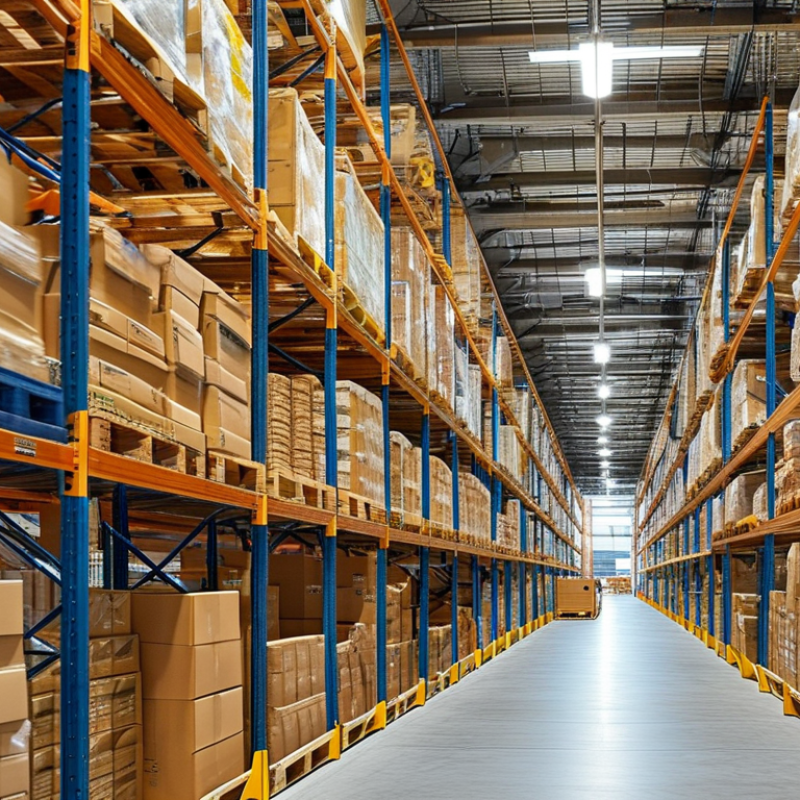
Selective Pallet Racking: 100% Pallet Access Under AS 4084:2012
What Are the 2026 Top Pallet Racking Types in Melbourne?
Selective pallet racking remains a practical choice for Melbourne warehouses needing 100% pallet access. Every pallet sits in its own location. Forklifts can reach it without moving another load first. This supports mixed stock, frequent picking, and strict batch control. It also suits businesses with changing product ranges. That sounds ideal, but it is not always the best answer.
Designers should reference AS 4084:2012 for steel storage racking design, installation, and operational safety. The system needs rated beams, protected uprights, secure connectors, and visible load notices. A damaged frame can look minor beside a busy loading dock. It may still reduce structural capacity. Regular inspections should check bent frames, missing locking pins, uneven floors, and impact marks. Melbourne operators should also consider narrow aisles, sprinkler clearances, and forklift turning space.
The MHI 2024 Annual Industry Report surveyed 1,049 supply-chain professionals and identified automation as a major investment priority. Selective racking can support this shift when locations are numbered clearly and scan data matches physical stock. However, automation does not repair poor rack discipline. It can repeat mistakes faster. A site assessment should compare pallet dimensions, turnover, aisle widths, ceiling height, and future volume. In some warehouses, higher-density drive-in or double-deep storage may recover more floor capacity. Access then becomes less direct. That trade-off deserves honest review.
| Pallet Racking Type | Direct Pallet Access | Typical Storage Depth | Typical Bay Configuration | Indicative Load per Pallet | Typical Clear Aisle Width | Best-Suited Application | Space Utilisation |
|---|---|---|---|---|---|---|---|
| Selective Pallet Racking | 100% Every pallet position is directly accessible |
1 pallet deep per side | 2–4 pallet positions per beam level; commonly 2,400–3,600 mm bay width | 500–2,000 kg, subject to engineered beam and upright design | Approximately 3,000–3,600 mm with counterbalance forklifts; narrower aisles may suit reach trucks | High-SKU warehouses, mixed inventory, frequent put-away and picking | Moderate storage density with excellent selectivity |
| Double-Deep Pallet Racking | Approximately 50% of pallet positions are directly accessible without moving the front pallet | 2 pallets deep per side | Typically 2–4 pallet positions per beam level | 500–2,000 kg per pallet position, subject to design | Approximately 3,000–3,600 mm, plus additional reach-truck operating requirements | Medium-SKU inventories requiring more density than selective racking | Higher density than selective racking with reduced selectivity |
| Drive-In Pallet Racking | Limited; pallets are stored in lanes and usually managed on a last-in, first-out basis | Multiple pallets deep in each lane | Lane depth commonly varies from 4 to more than 10 pallet positions | Typically 500–1,500 kg per pallet, subject to rail, frame and forklift design | Approximately 3,200–3,800 mm for suitable forklifts | Large quantities of similar products with low SKU variety | High cubic utilisation with lower selectivity |
| Push-Back Pallet Racking | Front pallet access only; pallets are stored on wheeled carts or nested rails | Commonly 2–5 pallets deep per lane | Multiple pallet positions at each level, generally loaded from one aisle | Typically 500–1,500 kg per pallet, subject to system design | Approximately 3,000–3,600 mm | Medium-turnover products requiring higher density and fewer aisles | High density with last-in, first-out stock rotation |
| Very Narrow Aisle Pallet Racking | 100% pallet access, similar to selective racking | 1 pallet deep per side | High-bay selective configuration, often above 8,000 mm overall height | 500–1,500 kg per pallet position, subject to engineered design | Approximately 1,800–2,200 mm with specialised VNA equipment | Large distribution centres where floor area is limited and clear height is available | High volume utilisation with high access efficiency |
| Mobile Pallet Racking | Potentially 100%, but only the selected aisle is open at a time | Usually 1 pallet deep per side | Selective racking mounted on powered or mechanically assisted mobile bases | 500–2,000 kg per pallet position, subject to base and rack design | One operating aisle can serve multiple rack runs; aisle width depends on equipment | Cold storage, archives and high-value inventory where floor utilisation is critical | Very high density with slower access to non-open aisles |
- Common Australian pallet footprint: approximately 1,165 × 1,165 mm.
- Typical clear height range: approximately 2,400–10,000 mm, depending on the building, forklift reach and fire-safety requirements.
- Typical beam levels: commonly 2–5 pallet levels, subject to ceiling height, pallet height and required clearances.
- “100% pallet access” means each pallet position can be reached directly from an operating aisle; it does not mean all pallets can be handled simultaneously.
- Racking should be designed, installed, inspected and maintained in accordance with the applicable requirements of AS 4084:2012, relevant workplace-safety obligations and the manufacturer’s engineering documentation.
- Final capacity labels must reflect the actual upright frames, beams, connectors, floor slab, pallet condition, forklift loads and site-specific impact protection.
Related Posts
-
Top Pallet Racking Solutions in Brisbane for 2025 You Need to Know
-
Longspan Shelving Tips for Efficient Storage Solutions?
-
Best 10 Pallet Racking Solutions in Melbourne for Efficient Storage
-
What Is Push Back Racking and How Does It Work?
-
How to Choose the Right Industrial Racking System For Your Needs?
-
10 Essential Tips for Choosing Longspan Shelving Solutions
