Industrial Printing Systems are entering 2026 under pressure to deliver speed, consistency, and measurable sustainability. In a factory, this means a production line that prints thousands of labels, cartons, or technical parts without visible banding, unexpected downtime, or costly substrate waste. The strongest systems must combine reliable hardware, intelligent software, accurate color control, and responsive service support.
Market data shows why this technology deserves close attention. Smithers’ study, The Future of Digital Print for Packaging to 2028, forecasts digital packaging print value to grow from approximately $22.3 billion in 2023 to $36.2 billion by 2028. Grand View Research also identifies steady expansion in industrial inkjet printing through the decade. These figures suggest strong demand, but growth alone does not identify the best machine. A faster press may consume more energy. A cheaper system may require expensive maintenance. Real performance is often decided during the night shift.
Frank Romano, a respected printing-industry analyst, has captured this transition clearly: “Digital printing is a process, not a product.” His point remains important in 2026. The best Industrial Printing Systems should be judged by complete workflow results, not impressive specifications alone. This comparison examines inkjet, toner, hybrid, and specialized systems across productivity, print quality, automation, operating costs, substrate flexibility, and environmental performance.
Some conclusions will remain imperfect. Vendor data is not always measured consistently. Regional service quality can also change the buying decision. Still, production evidence, independent market reports, and operator experience provide a practical foundation for identifying the leading systems available today.
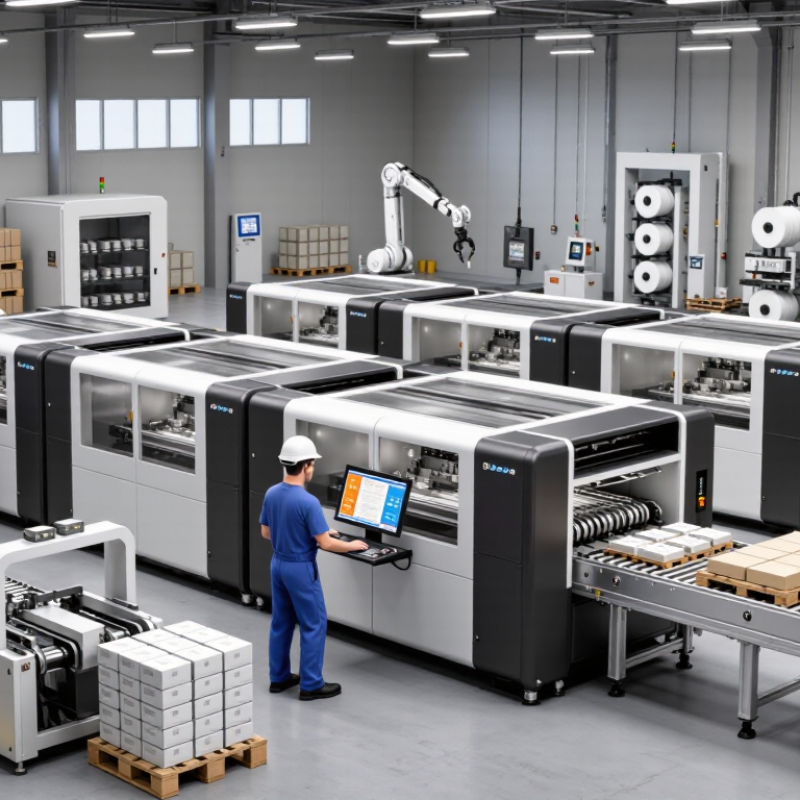
What Are the Top Industrial Printing Systems in 2026?
Industrial printing systems are production machines built for continuous, accurate, and repeatable output. Their scope includes packaging, labels, textiles, metal parts, building materials, and electronic components. Unlike office printers, they connect with curing units, inspection cameras, dryers, conveyors, and factory software. The best system depends on material, volume, image quality, and required production speed.
Core technologies include inkjet, electrophotographic, flexographic, screen, and thermal transfer printing. Inkjet supports variable data and direct-to-object decoration. Electrophotographic systems deliver sharp short runs with controlled color. Flexographic equipment remains valuable for high-volume packaging. UV, water-based, solvent, and resin inks offer different adhesion and durability. However, ink performance can change with humidity, surface energy, and curing temperature. A specification sheet may look impressive, yet real factory conditions can expose hidden limits.
Tips: Test the actual substrate before purchasing. Measure setup time, waste, maintenance access, and operator training. Inspect fine text under production lighting. Ask for repeatability data, not only maximum speed. No system wins everywhere. A faster line may create more rejected pieces. In production reviews, teams sometimes focus too heavily on resolution and overlook cleaning routines, spare parts, and workflow integration. That is a costly mistake. Better decisions come from controlled trials, documented measurements, and honest feedback from operators.
Representative production-speed benchmarks by core industrial printing technology. Values show approximate midpoint throughput in metres per minute and vary by substrate, ink, print quality, and job configuration.
Flexographic, gravure, and web-offset systems generally provide the highest continuous production speeds for long-run packaging and publication work. Digital inkjet systems offer a balance of industrial productivity, variable-data capability, and shorter setup times, while screen printing remains effective for specialized, high-deposit applications.
What Are the Top Industrial Printing Systems in 2026?
Industrial printing systems are best classified by process and application, not by machine size. Digital inkjet systems deposit variable data without plates. Screen printing uses a stencil and suits thick coatings, glass, electronics, and durable graphics. Flexographic and gravure systems remain efficient for long packaging runs. Electrophotography supports short, personalized batches. The boundaries are not perfectly clean.
Application changes the equipment choice. Packaging needs fast registration, food-contact compliance, and low-migration inks. Textile production prioritizes color penetration, fabric handling, and washing resistance. Decorative panels may require textured effects, precise white layers, and rapid curing. Electronics printing demands micron-level alignment and stable conductive materials. A useful classification still has blind spots.
MarketsandMarkets estimates the industrial printing market could grow from roughly USD 20 billion in 2023 to more than USD 30 billion by 2028. Smithers also identifies digital print as a continuing growth area, especially in packaging and customized production. These figures are forecasts, not guarantees. Actual performance depends on substrate costs, energy use, maintenance, and operator skill. A production line may print beautifully during testing, then struggle with dust, humidity, or uneven surfaces. Careful trials remain essential.
| Printing Process | System Classification | Primary Applications | Typical Substrates | Typical Production Range | Typical Resolution or Line Screen | Ink or Toner Technology | Main Advantages | Key Limitations |
|---|---|---|---|---|---|---|---|---|
| Offset Lithography | Sheetfed commercial and packaging press | Commercial brochures, books, folding cartons, premium stationery and marketing materials | Coated and uncoated paper, paperboard and selected synthetic sheets | Approximately 10,000–18,000 sheets/hour | Usually 150–300 lpi | Oil-based or low-energy-curing process inks; aqueous or UV coatings may be added | Excellent image quality, accurate color reproduction and economical unit cost at medium-to-long runs | Requires plate production and setup; generally less economical for short variable-data jobs |
| Web Offset Lithography | Heatset or coldset continuous-web system | Magazines, newspapers, catalogs, direct mail, inserts and high-volume commercial products | Continuous paper rolls, including coated and newsprint grades | Approximately 30,000–75,000 impressions/hour | Usually 133–200 lpi | Heatset or coldset offset inks; heatset systems commonly use dryers | Very high throughput, efficient roll handling and consistent long-run production | High makeready cost, substantial floor-space requirements and limited substrate flexibility |
| Flexographic Printing | Central-impression, stack or inline flexographic press | Flexible packaging, labels, corrugated liners, paper bags, films and consumer-product packaging | Plastic films, foil, paper, nonwovens, labels and corrugated board | Approximately 100–600 m/min, depending on configuration and substrate | Commonly ಿಯ? 100–200 lpi; advanced systems can exceed this | Water-based, solvent-based, UV or electron-beam-curable inks | Suitable for diverse web substrates, fast drying and efficient inline finishing | Requires flexographic plates; fine tonal control and setup consistency can be demanding |
| Rotogravure | Engraved-cylinder packaging and publication press | Long-run flexible packaging, decorative laminates, gift wrap, catalogs and specialty publications | Plastic films, foil, paper and laminate structures | Approximately 100–300 m/min | Typically 120–200 lpi, with cylinder-specific variation | Primarily solvent-based inks; water-based systems are also used in some applications | Highly consistent color, smooth solids and strong economics for very long runs | Engraved cylinders are expensive and time-consuming to prepare; poor fit for short runs |
| Screen Printing | Flatbed, rotary or specialty industrial screen system | Industrial panels, glass, ceramics, textiles, electronics, signage and functional coatings | Textiles, glass, metal, plastics, ceramics, wood and rigid composite panels | Typically 100–3,000 m²/hour, depending on format and automation | Usually 30–150 lpi | Solvent-based, water-based, UV-curable, silicone or electrically functional formulations | High deposited ink thickness, strong opacity and excellent adhesion on many rigid surfaces | Lower fine-detail productivity than digital systems; screens require preparation and cleaning |
| Continuous Inkjet | Industrial coding, marking and variable-data inkjet system | Product coding, lot and date marking, serialization, pharmaceutical packaging and cable marking | Plastic, glass, metal, cartons, films, cables and painted surfaces | Line speeds commonly reach 300 m/min or more in coding applications | Character heights commonly 1–20 mm; system-dependent | Fast-drying solvent, water-based or specialty conductive inks | Non-contact printing, real-time variable data and reliable integration into production lines | Print size is limited; solvent management and nozzle maintenance may be required |
| Single-Pass Production Inkjet | High-volume roll-to-roll or sheetfed digital inkjet system | Direct mail, transactional documents, labels, folding cartons, books and personalized packaging | Uncoated and coated papers, paperboard, films and selected synthetic materials | Approximately 50–150 m/min for many production systems | Commonly 600–1,200 dpi addressable output | Water-based pigment or dye inks; UV and other curing chemistries are used for selected substrates | Variable-data capability, short setup time, reduced plate waste and efficient versioned production | Substrate coating and ink compatibility can affect drying, color gamut and operating cost |
| Cut-Sheet Production Inkjet | High-volume digital sheetfed inkjet press | Books, direct mail, transactional documents, brochures and short-run commercial work | Inkjet-treated or compatible coated and uncoated paper sheets | Approximately 4,000–15,000 sheets/hour | Typically 600–1,200 dpi addressable output | Primarily water-based pigment inks with inline drying or curing | Fast changeovers, personalization, reduced makeready and economical short-to-medium runs | Paper selection is important; heavy coverage may require additional drying and finishing capacity |
| Electrophotography | Production toner press for cut-sheet or continuous-feed output | Short-run commercial print, transactional documents, labels, photo products and customized packaging | Paper, synthetic sheets, labels and selected specialty media | Approximately 60–200 m/min or 2,000–6,000 sheets/hour, depending on format | Typically 600–2,400 dpi device resolution | Dry or liquid toner transferred by electrostatic imaging and fixed by heat, pressure or other methods | Consistent variable-data output, quick job changes and strong performance for short runs | Media range and maximum coverage can be more limited than offset; toner and fusing costs may be significant |
| UV and Solvent Wide-Format Inkjet | Flatbed, roll-to-roll or hybrid large-format system | Industrial signage, displays, décor, vehicle graphics, interior graphics and rigid-board production | PVC, banner materials, self-adhesive films, acrylic, glass, aluminum composite, wood and corrugated board | Approximately 20–150 m²/hour, depending on quality mode and ink type | Typically 600–1,440 dpi addressable output | UV-curable, eco-solvent, solvent or resin-based inks | Direct-to-board capability, broad media flexibility, fast customization and strong visual impact | Throughput is generally lower than analog packaging presses; outdoor durability depends on ink and finishing |
| Industrial 3D Printing | Additive manufacturing system for printed parts | Prototypes, tooling, jigs, fixtures, customized components and low-volume production parts | Photopolymer resin, thermoplastic filament or powder, metal powder and composite materials | Build speed varies widely; commonly measured by cm³/hour or layer cycle time | Typical layer thickness ranges from about 20–300 micrometers | Photopolymerization resin, fused thermoplastic, binder, powder-bed or metal fusion processes | Complex geometries, mass customization, low material waste and rapid design iteration | Surface finishing, dimensional tolerance, material qualification and post-processing can add cost and time |
In 2026, industrial printing systems are becoming production tools, not isolated machines. High-speed inkjet handles variable codes, graphics, and batch data on cartons, films, and metal parts. Laser marking supports durable identification where contact, solvents, or labels create problems. Thermal transfer remains practical for flexible packaging and clean, sharp ribbons. Each system serves a different surface, speed, and traceability requirement.
The strongest manufacturing lines connect printers with sensors, vision inspection, and plant software. A camera can reject a blurred date code before the product leaves the conveyor. Live dashboards can show nozzle health, ink use, printhead temperature, and downtime patterns. In my experience, this visibility matters more than impressive maximum speed. A fast printer still fails when dust, vibration, or poor substrate control is ignored. Small details decide. Operators also need simple access to recipes, alarms, and cleaning instructions. Automation helps, but it does not remove responsibility.
Sustainability is influencing system design in 2026. Manufacturers are measuring solvent use, energy demand, consumable waste, and rework instead of trusting broad environmental claims. Energy-efficient curing, reduced-maintenance printheads, and recyclable marking materials can lower impact, but results depend on the full process. This point deserves caution. A newer system is not automatically better. Before purchase, teams should test real materials under real humidity, line speeds, and shift patterns. They should record failed prints, changeover time, and operator feedback. The test may expose inconvenient weaknesses, yet that evidence supports a more reliable investment.
In 2026, industrial printing systems should be compared by measurable performance, not impressive specifications. Smithers’ The Future of Digital Print to 2029 forecasts the global digital print market will reach about 230.5 billion dollars by 2029. That growth increases pressure on uptime, repeatability, and production flexibility.
Throughput is only one part of the decision. Measure usable output during a full shift, including setup, cleaning, calibration, and material changes. Shorter jobs expose weak automation quickly. Record sheets per hour, average changeover time, and unplanned stoppage minutes. Real production data beats showroom speed.
Color consistency matters.
ISO 12647-based controls can support repeatable results across shifts and substrates. However, a system may perform differently on coated board, corrugated materials, films, or textured stock. Test the exact materials used in daily production. Keypoint Intelligence’s production-print research repeatedly highlights automation and workflow integration as major investment priorities, not isolated hardware speed. A reliable comparison should include labor hours, ink or toner consumption, energy use, maintenance intervals, and waste per job. The European Printing Ink Association also encourages lifecycle thinking when assessing print processes, although energy figures vary by application and machine configuration.
Total cost of ownership often reveals the uncomfortable answer. A faster press can lose its advantage when skilled operators spend hours correcting color or feeding difficult media. I would also question vendor-provided uptime claims. They are useful, but incomplete. Independent trials, service-response records, and a 30-day production log provide stronger evidence. Expect a few surprises.
Selecting an industrial printing system starts with the production task, not the equipment catalog. Define the substrate, print area, line speed, and required message life. Corrugated boxes may suit high-speed inkjet printing, while metal parts often need durable laser marking. Flexible films can require precise ink adhesion and controlled drying. Small text demands stable resolution and accurate registration.
Measure the real duty cycle. A machine rated for 100 meters per minute may struggle during frequent stops, temperature changes, or long shifts. Request sample tests using your actual materials, including dusty cartons and textured surfaces. Check printhead access, cleaning time, ink or consumable storage, and operator training needs. These details affect uptime more than impressive specifications.
Integration also matters. Confirm communication with sensors, production software, reject systems, and inspection cameras. Ask how the system records print data and handles message changes. A clear interface reduces mistakes during busy changeovers. Total cost includes maintenance, energy, ventilation, consumables, and unexpected downtime. No selection is perfect. A neat spreadsheet can still mislead. In one practical review, the fastest unit lost its advantage because cleaning took too long. Allow room for that kind of surprise. Test a complete shift before committing, and involve operators who will actually run the system.