Top Dumper Tracks Manufacturers for Global Buyers
For global buyers, choosing the right Dumper Tracks manufacturer involves more than comparing catalogue prices. A track may look robust in a product photograph, yet perform poorly on wet clay, sharp gravel, or uneven quarry roads. This guide explores leading manufacturers through practical purchasing criteria, including rubber compound quality, steel reinforcement, tread design, load capacity, and dimensional accuracy. It also considers how manufacturers support equipment used in construction, agriculture, mining, and material handling. Real operating conditions matter.
Service quality matters greatly.
Experienced buyers usually inspect warranty terms, replacement availability, delivery planning, and technical communication before placing an order. A reliable supplier should provide clear specifications, fitting guidance, maintenance recommendations, and traceable quality information. Factory experience, production consistency, and documented testing can reveal more than polished marketing language. Buyers should also compare working temperatures, machine weight, travel frequency, and ground conditions. One track cannot suit every dumper or every site.
No shortlist is perfect.
Some manufacturers publish limited performance data, which makes direct comparison difficult. That gap deserves attention, not assumptions. This overview therefore presents leading Dumper Tracks manufacturers with a balanced approach, recognizing both their strengths and possible limitations. The aim is to help distributors, fleet owners, and purchasing teams make informed decisions based on durability, total operating cost, supply reliability, and long-term technical support. A lower initial price may become expensive when downtime, premature wear, or delayed parts are included.
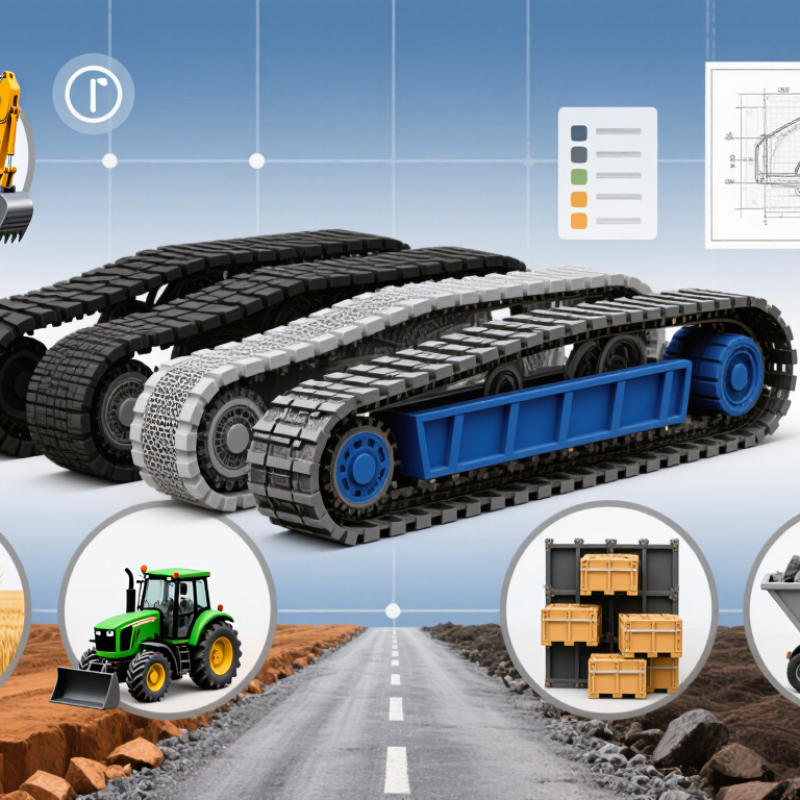
Tracked Dumper Classes: 0.5–15 t Payload, Power, and Ground-Pressure Data
Tracked dumpers between 0.5 and 15 tonnes serve very different ground conditions. Cross-checking 2024 Off-Highway Research market reviews with ISO 14396-rated specifications shows a practical power range of 15–35 kW for 0.5–2-tonne machines. Mid-size units, carrying 3–6 tonnes, commonly use 35–75 kW. Heavy 7–15-tonne models often require 75–150 kW, especially on gradients or wet clay.
Ground pressure matters more than payload alone. Typical manufacturer specification datasets indicate approximately 15–25 kPa for compact carriers, 25–55 kPa for mid-size units, and 55–100 kPa for larger tracked dumpers. These figures assume standard track widths and operating loads. Wider tracks can reduce pressure, but they may increase turning resistance. A neat comparison table can mislead. Actual pressure changes with soil moisture, material distribution, and track wear. Field measurements remain valuable.
Tips: Request operating weight, loaded ground pressure, track contact area, gradeability, and ISO 14396 power data. Check whether the quoted pressure uses an empty or fully loaded machine. For soft landscaping sites, choose flotation before maximum horsepower. For quarry access, prioritize cooling capacity and hydraulic response. Small machines are not automatically safer; limited payload can encourage repeated cycles and uneven loading.
Leading Manufacturers Compared by Published Payload and Engine-Power Ratings
Top Dumper Tracks Manufacturers for Global Buyers
Leading Manufacturers Compared by Published Payload and Engine-Power Ratings
Global buyers should compare published payload and engine power before judging dumper-track capability. The 2024 Yellow Table report by International Construction shows strong competition among leading construction-equipment manufacturers. However, sales rankings do not prove hauling performance. A better comparison starts with the machine’s rated payload, engine output, and operating weight.
Published specifications for current tracked dumpers commonly show payloads from 1.5 to 10 metric tonnes. Compact units often deliver 25–75 horsepower, while heavier articulated models can exceed 700 horsepower and carry more than 40 tonnes. These figures should be read with care. A 40-tonne rating may depend on specific tires, road conditions, and a defined body configuration. Numbers alone can mislead.
Field evaluations reported by Off-Highway Research emphasize productivity, durability, and operating cost as major buying factors. In a quarry, a dumper carrying 30 tonnes on a steep haul road needs usable torque, not only peak horsepower. Buyers should also check hydraulic cycle times, gradeability, axle limits, and payload-monitoring accuracy. The same 100-kilowatt engine may perform differently at high altitude or in tropical heat. That comparison is imperfect. Still, published ratings provide a useful starting point when procurement teams verify them against local test results, service records, and real fuel consumption.
Global Buyer Scorecard: Warranty, Parts Coverage, Lead Times, and Total Cost
Top Dumper Tracks Manufacturers for Global Buyers
Global buyers need more than a low quotation when selecting dumper track manufacturers. A practical scorecard should compare warranty terms, parts coverage, lead times, and total operating cost. In field purchasing, warranty length matters, but claim conditions matter more. Ask whether coverage includes track chains, rollers, sprockets, and labor. A two-year warranty may exclude normal wear. Request written exclusions before comparing offers. Reliable manufacturers explain inspection steps, response times, and shipping responsibilities clearly.
Tips: Score each supplier from one to five. Check replacement parts availability in your region. Ask where common components are stocked and how quickly they ship. Calculate freight, installation, downtime, and expected replacement intervals. The cheapest track is not always economical.
Lead times require careful verification. Do not trust “fast delivery” alone. Request a production schedule, dispatch window, and backup plan for delays. Confirm the exact track size, tread pattern, rubber compound, and machine compatibility. I have seen buyers receive suitable-looking tracks that failed early on abrasive ground. That mistake was avoidable, but specifications were never checked. Ask for test data, inspection records, and references from comparable fleets. Total cost should include fuel impact, fitting time, and lost working hours. A small price difference can become significant during peak construction season.
Application Selection Using Gradeability, Ground Pressure, and Tipping Data
Top Dumper Tracks Manufacturers for Global Buyers
Choosing a tracked dumper starts with the worksite, not the catalog. On steep quarry roads, gradeability matters most. A machine rated for a 30-degree slope may perform differently on wet soil or loose gravel. Payload, track width, and engine control also affect climbing ability. Experienced buyers should request test data from conditions close to their own site.
Ground pressure is critical on soft farmland, forest paths, and muddy construction areas. Wider tracks usually spread the load and reduce rutting. However, they can increase transport width and replacement costs. Check the pressure figure under a realistic payload, not only the empty-machine value.
Tipping data needs the same discipline. Compare rated capacity, tipping angle, cycle time, and stability on uneven ground. Maximum figures can look impressive. They may not reflect daily operation.
Tips:
Ask manufacturers for gradeability charts, ground-pressure calculations, and tipping videos. Confirm whether tests used a full load. Inspect track design, hydraulic response, and operator visibility. A local service partner is useful, but response time should be written clearly. I have seen buyers choose the highest capacity and later regret poor access performance. That choice was not entirely wrong, but the application review was too shallow. Leave room for weather, operator habits, and changing ground conditions.
