Top 10 Single Stage Pumps for Global Buyers?

Choosing among the Top 10 Single Stage Pumps for Global Buyers requires more than comparing price tags. A pump may look efficient on paper yet struggle with abrasive water, unstable voltage, or a poorly measured suction line. Experienced buyers inspect the complete duty point: flow rate, total head, fluid temperature, viscosity, seal arrangement, motor efficiency, and required operating hours. Details decide.

Dr. Lev Nelik, a recognized pump consultant and author, offers a practical principle: “Select the pump for the system, not the catalog.” That advice frames this guide. Each Single Stage Pump is considered through real purchasing concerns, including material quality, impeller design, maintenance access, spare-parts availability, noise, installation depth, and after-sales support. A stainless-steel casing may suit clean water, while cast iron can provide durable service in many general industrial applications. Neither choice is automatically correct.

Global conditions add another layer. A pump selected for 50 Hz power may require a different motor configuration in a 60 Hz market. Local standards, climate, transport distance, and installer skill also influence reliability. These points are easy to overlook.

No ranking can replace site data. That is the uncomfortable truth. The strongest model for one facility may be wasteful or unsuitable elsewhere. This introduction therefore treats the list as a practical buying framework, not a universal verdict. Readers can compare each pump against measured demand, lifecycle cost, and realistic maintenance capacity before making a final decision.
Top 10 Single Stage Pumps for Global Buyers?

What Are Single-Stage Pumps and How Do They Work?

A single-stage pump uses one impeller to move liquid from suction to discharge. In many industrial models, an electric motor turns the impeller inside a shaped casing. Liquid enters near the center, gains velocity, and leaves through the outlet. The casing converts much of that velocity into pressure. This design is compact and relatively easy to inspect. It suits water transfer, cooling circuits, irrigation, and general process service. Not every application needs high pressure.

Performance depends on more than motor size. Flow rate, total head, liquid temperature, viscosity, and pipe layout must match the pump curve. Buyers should check the duty point, suction conditions, seal material, and operating hours. Poorly sized suction piping can create turbulence and cavitation, often sounding like gravel. That damage may begin quietly. A strainer, when appropriate, should not become clogged and starve the pump.

Field results can differ from catalogue figures. Actual losses arise from elbows, valves, elevation changes, and worn components. Maintenance records often reveal problems through vibration, leakage, bearing temperature, or unusual current draw. Alignment matters. So does clean liquid. A small mismatch may produce unstable flow or excess energy use. Engineers should question whether the selected material tolerates the liquid over time. Stainless steel is not automatically suitable for every chemical service. The calculation is rarely perfect, and an oversized pump can be just as troublesome.

Top 10 Single-Stage Pumps for Global Buyers

What Are Single-Stage Pumps and How Do They Work?

A single-stage pump uses one impeller to transfer liquid by converting motor energy into fluid pressure and flow. The chart compares representative maximum total head values commonly found in global industrial, municipal, agricultural and building-service applications. Actual performance depends on impeller diameter, speed, fluid properties, system resistance and operating point.

Which Types of Single-Stage Pumps Suit Different Applications?

Top 10 Single Stage Pumps for Global Buyers?

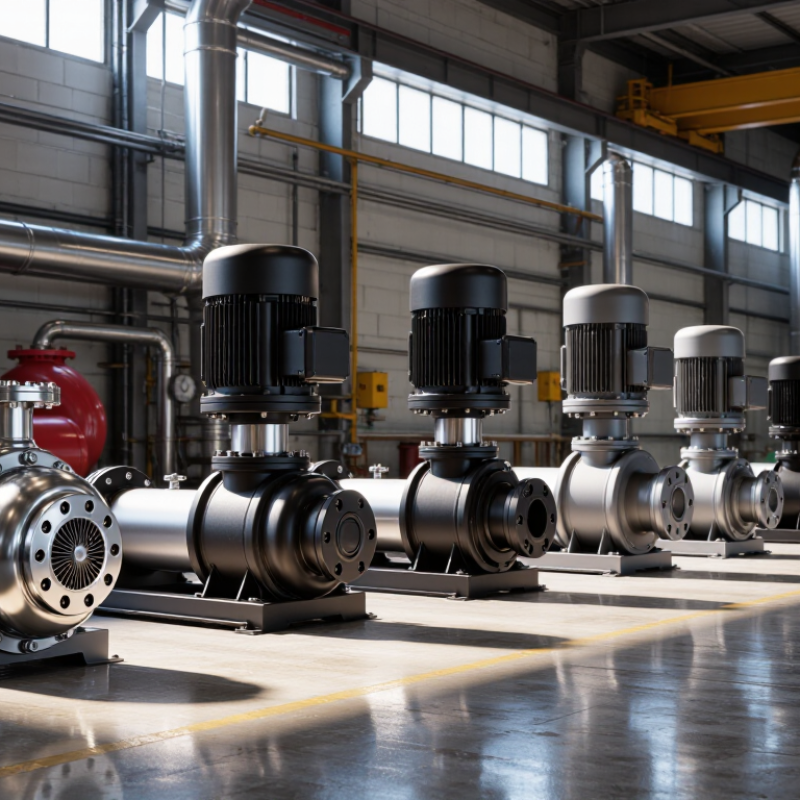
Single-stage pumps suit many duties, but their designs are not interchangeable. End-suction centrifugal pumps work well for clean water, irrigation, and general transfer. Their compact footprint simplifies installation near storage tanks. Horizontal split-case pumps handle higher flow rates, such as municipal distribution or cooling systems. They offer easier maintenance, although alignment still demands care.

Vertical inline pumps save floor space in building services and closed-loop heating systems. Self-priming models help transfer liquids from shallow pits, but suction piping must remain airtight. For wells, drainage, or narrow sumps, vertical turbine and submersible single-stage pumps can be practical choices. Chemical service requires compatible wetted materials, while abrasive liquids may need hardened components. Sewage applications also require suitable solids passage. A pump selected only by motor power may perform poorly.

Tips: Confirm flow, total head, liquid temperature, viscosity, and solids content before comparing models. Check NPSH available against NPSH required, especially with hot liquids or long suction lines. Inspect the pump curve at the real operating point, not only at maximum capacity. In field commissioning, I have seen oversized pumps cycle repeatedly and waste energy. That mistake is easy to miss. Allow space for seal replacement and coupling inspection. Local voltage, standards, spare-part access, and climate protection also affect reliable operation. Some specifications look complete, but one missing detail can change the recommendation.

How to Compare the Top 10 Single-Stage Pumps Globally?

Comparing the top 10 single-stage pumps globally requires more than reading headline flow rates. Start with one duty point: 80 m³/h at 45 metres head, with 6 metres of suction lift. Then compare efficiency at that exact point, not only the best value on a curve. The U.S. Department of Energy’s Pumping System Assessment Tool emphasizes system-level efficiency, because throttling and oversized motors can waste substantial electricity. The International Energy Agency has also reported that electric motor systems consume more than 40% of global electricity. Small efficiency differences matter.

Check hydraulic performance under ISO 9906 testing, including flow, head, power, and tolerance limits. Review NPSH3 values carefully. A pump requiring 4 metres may struggle when hot water, altitude, or a clogged strainer reduces the margin.

Materials should match the fluid, temperature, salinity, and expected corrosion. Ask for motor efficiency data, voltage options, ingress protection, noise levels, and documented factory testing.

Lifecycle cost should include energy, seals, bearings, downtime, and spare-part availability across regions. The European Commission’s Ecodesign work on water pumps supports evaluating efficiency beyond purchase price. A low-cost unit can become expensive quickly.

Datasheets can mislead. They often show ideal laboratory conditions. Compare curves, warranty terms, service networks, and replacement lead times together. Also question whether the selected pump is oversized; that mistake is common and difficult to reverse.

What Specifications Matter When Choosing a Single-Stage Pump?

Top 10 Single Stage Pumps for Global Buyers?

What Specifications Matter When Choosing a Single-Stage Pump?

Choosing a single-stage pump starts with the actual duty, not the catalogue image. Specify the required flow rate and total head at the same operating point. A pump delivering 50 m³/h at 30 metres may perform poorly at another duty. Small errors become expensive. Check fluid temperature, viscosity, density, and the presence of suspended solids. These details affect impeller design, motor sizing, and hydraulic efficiency.

Net positive suction head available is equally important. Compare it with the pump’s required NPSH, leaving a practical safety margin. Poor suction conditions can cause cavitation, vibration, and rapid damage. I once focused too heavily on rated head and overlooked a long, narrow suction pipe. That was a useful mistake. Installation conditions matter as much as laboratory performance.

Material selection should match the liquid and operating temperature. Consider casing material, shaft protection, impeller construction, and mechanical seal compatibility. For international projects, confirm voltage, frequency, motor efficiency class, protection rating, flange standards, and documentation requirements. A 50 Hz motor may not suit every local power system. Ask for certified performance curves, test records, spare-part details, and clear maintenance intervals. Service access also matters; a technically excellent pump becomes frustrating when the seal cannot be replaced safely on site.

How Can Global Buyers Evaluate Suppliers, Costs, and After-Sales Support?

A practical evaluation of single stage pump suppliers starts with verified operating data. Ask for flow rate, head, efficiency, materials, seal type, and motor standards. Request test reports linked to the exact model, not a similar catalogue photograph. Check production capacity, inspection procedures, export experience, and packaging quality. Factory videos help, but they cannot replace an independent inspection. That gap matters.

Compare total cost, not only the quotation. Include the pump, motor, control panel, freight, insurance, duties, installation, and expected energy use. A low purchase price can hide expensive electricity consumption or difficult spare-part sourcing. Ask suppliers to state payment terms, delivery conditions, warranty limits, and price validity. Currency changes can distort comparisons. Use the same technical specification for every offer.

After-sales support should be tested before purchase. Ask how quickly engineers respond across time zones and whether remote troubleshooting is available. Confirm spare-part stock, seal dimensions, bearing references, and delivery times in writing. Request a sample maintenance schedule and clear warranty procedures. Some suppliers promise support enthusiastically, then answer slowly after payment. I would not treat that risk as minor. Small details reveal reliability. A supplier that explains failure limits honestly may deserve more trust than one making perfect claims. Still, written evidence and service history should guide the final decision.

Top 10 Single Stage Pumps for Global Buyers? - How Can Global Buyers Evaluate Suppliers, Costs, and After-Sales Support?

The ranking below compares widely used single-stage pump configurations rather than specific companies or brands. Performance and pricing are indicative market ranges for standard industrial models and should be verified against the required duty point.

Rank Single-Stage Pump Type Typical Applications Typical Flow Range Typical Head Range Typical Efficiency Common Materials Indicative Motor Range Indicative Unit Cost (USD) Typical Lead Time Key Supplier Evaluation Points After-Sales Support to Require
1 Horizontal Split-Case Centrifugal Pump Municipal water supply, cooling water, irrigation, fire-water systems and large process-water duties. 100–5,000 m³/h 20–160 m 78–90% Cast iron, ductile iron, stainless steel, duplex stainless steel 15–1,000 kW $2,500–$35,000 8–18 weeks Verify tested duty-point performance, shaft alignment, bearing design, casing pressure rating and spare-parts availability. Factory test report, installation drawings, commissioning guidance, seal and bearing kits, and remote troubleshooting.
2 End-Suction Frame-Mounted Pump General industrial water, HVAC circulation, chemical transfer, utilities and process services. 5–1,500 m³/h 10–150 m 65–88% Cast iron, carbon steel, stainless steel, bronze 1.5–500 kW $700–$18,000 6–16 weeks Check operating range, NPSH requirement, mechanical-seal compatibility, coupling guard and baseplate rigidity. Replaceable wear parts, exploded drawings, seal-selection assistance, alignment instructions and service training.
3 Close-Coupled End-Suction Pump Building services, clean-water transfer, light industrial circulation and small irrigation systems. 1–250 m³/h 5–100 m 55–82% Cast iron, stainless steel, engineered thermoplastics 0.37–75 kW $180–$6,000 3–10 weeks Compare lifecycle cost, motor efficiency class, service-factor rating, seal design and availability of standard replacement motors. Clear wiring diagrams, spare seals, impellers, bearings, troubleshooting charts and local distributor coverage.
4 Vertical Inline Centrifugal Pump HVAC chilled-water and hot-water circulation, pressure boosting and compact mechanical-room installations. 2–500 m³/h 5–160 m 60–88% Cast iron, stainless steel, bronze, carbon steel 0.37–250 kW $350–$12,000 4–12 weeks Evaluate pipe-load limits, motor cooling, vibration, seal access, minimum-flow requirements and compatibility with the piping layout. Replacement cartridge-seal instructions, vibration guidance, commissioning checklist and stocked wear components.
5 Vertical Turbine Pump Deep wells, raw-water intake, irrigation, cooling-water systems and high-volume municipal pumping. 50–10,000 m³/h 15–300 m 70–90% Cast iron, carbon steel, stainless steel, bronze 15–2,000 kW $8,000–$120,000 12–30 weeks Confirm well data, column length, bowl efficiency, thrust-bearing load, submergence, shaft design and motor starting method. Site survey, installation supervision, shaft alignment procedure, vibration analysis and long-term parts planning.
6 Self-Priming End-Suction Pump Wastewater transfer, drainage, sewage handling, dewatering and applications with intermittent suction-line air. 5–800 m³/h 8–90 m 50–78% Cast iron, ductile iron, stainless steel, abrasion-resistant alloys 1.5–250 kW $900–$20,000 6–16 weeks Check solids passage, priming time, suction lift, clog resistance, abrasion allowance and access for cleaning. Impeller and wear-plate guidance, cleaning procedure, seal kits, emergency troubleshooting and field-service response time.
7 Magnetic-Drive Process Pump Corrosive or hazardous chemical transfer where reduced leakage risk is more important than maximum flow capacity. 0.5–250 m³/h 5–100 m 35–75% Fluoropolymer-lined steel, polypropylene, PVDF, stainless steel, silicon carbide 0.25–90 kW $800–$25,000 6–18 weeks Verify chemical compatibility, dry-running tolerance, containment design, temperature range, solids limit and spare magnet-capsule cost. Chemical-compatibility documentation, dry-run procedures, containment inspection instructions and specialized repair support.
8 Vertical Sump Pump Open-tank transfer, industrial sumps, drainage, metalworking fluids, wastewater and process-liquid handling. 2–600 m³/h 5–100 m 45–82% Cast iron, stainless steel, duplex stainless steel, engineered plastics 0.75–250 kW $1,200–$30,000 8–20 weeks Review immersion depth, dry length, cantilever-shaft deflection, tank geometry, solids handling and corrosion allowance. Installation templates, shaft and bearing inspection instructions, replacement-column support and field commissioning.
9 Single-Stage Slurry Pump Mining, mineral processing, dredging, ash handling and abrasive solids transfer. 10–2,500 m³/h 10–100 m 45–80% High-chrome alloy, rubber-lined iron, abrasion-resistant steel 5.5–1,000 kW $2,000–$50,000 8–24 weeks Require slurry concentration data, particle-size distribution, specific gravity, wear-life estimates and replaceable wet-end parts. Wear monitoring, operating-limit guidance, wet-end replacement training and documented wear-part warranties.
10 Single-Stage Sanitary Centrifugal Pump Food, beverage, dairy, pharmaceutical and hygienic liquid-transfer applications. 1–250 m³/h 5–100 m 50–82% 316L stainless steel, polished stainless steel, elastomers suitable for the process fluid 0.55–110 kW $1,000–$22,000 6–18 weeks Check surface finish, drainability, hygienic design, elastomer certificates, clean-in-place requirements and documentation traceability. Material certificates, seal and elastomer documentation, cleaning validation data, spare kits and hygienic-service training.

Cost basis: Indicative 2026 USD ranges for a standard pump unit, generally excluding installation, piping, controls, freight, taxes, duties and special certification. Actual pricing depends on capacity, pressure rating, materials, motor efficiency, seals, testing and destination market. Buyers should request a duty-point curve, NPSH data, efficiency data, dimensional drawings, material certificates, warranty terms and a documented spare-parts plan before placing an order.