Fertilizer Granulation plays a crucial role in modern agriculture. According to industry reports, over 60% of global fertilizers are produced in granular form. This process enhances nutrient delivery and ensures better crop yields. Efficient granulation reduces dust, improving safety and handling during transportation. In a market projected to reach $365 billion by 2025, suppliers must recognize the significance of quality granulation.
The efficiency of Fertilizer Granulation influences production capacity and costs. Inconsistent granule sizes can lead to uneven application, affecting plant growth. Reports indicate that over 30% of fertilizers fail to perform optimally due to poor granulation practices. Manufacturers must invest in technology and expertise to improve their granulation processes.
While the benefits are clear, challenges exist. Factors such as raw material quality and production technology can impact granulation success. Suppliers must reflect on their processes, continuously seeking improvement. Emphasizing Fertilizer Granulation is not just a trend—it's a necessity for sustaining global food production and enhancing agricultural efficiency.
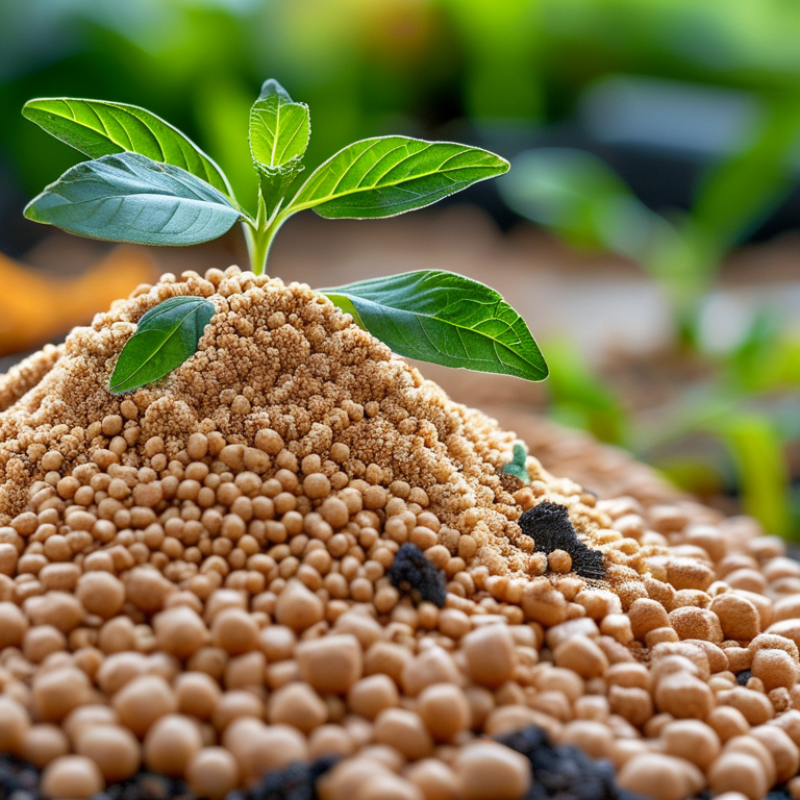
Fertilizer granulation plays a crucial role in enhancing nutrient delivery efficiency. This process transforms raw materials into granules, allowing for better control over application rates and nutrient release. According to the International Fertilizer Association (IFA), properly granulated fertilizers can increase nutrient use efficiency by up to 30%. This efficiency is vital for global food production, especially in regions facing soil degradation.
Granulated fertilizers also improve transport and storage. Their uniform size minimizes dust emissions during handling, reducing waste and environmental impact. A study from the Food and Agriculture Organization (FAO) noted that dust losses can account for 5% to 10% of total fertilizer usage. Granulation helps mitigate this waste, ensuring that more nutrients reach plants effectively.
Despite significant benefits, challenges persist. The granulation process requires careful adjustment of parameters like temperature and moisture. Inconsistent granule sizes can lead to uneven nutrient distribution. This calls for ongoing research and development to refine granulation techniques, ensuring optimal results for suppliers and farmers alike. Continuous innovation is essential for maintaining the balance between efficiency and sustainability in fertilizer production.
The global market for granulated fertilizers is experiencing remarkable growth. According to recent industry reports, the demand for these fertilizers increased by over 8% in the last year. Granulated fertilizers enhance nutrient delivery and improve soil structure, making them vital for modern agriculture.
Farmers favor granulated products due to their convenience and efficacy. The ability to apply fertilizers without concerns about uneven dispersion is significant for crop yield improvement. Additionally, as precision agriculture gains traction, suppliers must adapt to the growing preference for these products. In many regions, granulated forms allow for more precise nutrient management, reducing waste and enhancing sustainability.
However, the process of granulation is not without challenges. It requires investment in technology and careful consideration of different materials. Some suppliers face difficulties in achieving the ideal granule size for maximum effectiveness. As the market evolves, addressing these challenges is essential for suppliers aiming to stay competitive in a rapidly changing landscape.
Fertilizer granulation plays a crucial role in optimizing storage and transportation costs. Granulated fertilizers are more compact and easier to handle compared to powdered forms. This compactness reduces space requirements during storage, allowing suppliers to store larger quantities efficiently. Fewer storage facilities may be needed, which can significantly lower operational costs.
Transportation costs also benefit from granulation. Granules allow for more streamlined loading and unloading processes. The uniform shape and size of granules lead to better packing density in shipping containers. This can lower freight costs per unit of fertilizer. However, not all granulated fertilizers are created equal. Some may require special handling or additional protective measures, which can add complexity and costs.
Cost-efficiency is a key consideration for suppliers. Yet, factors like moisture absorption and breakage can affect profitability. A thorough assessment of the granulation process is necessary. This ensures that the final product meets both quality and cost-effectiveness standards. Striking the right balance can be challenging but is essential for competitiveness in the market.
Technological advances in fertilizer granulation are reshaping the agricultural landscape. These innovations enhance nutrient delivery, improve efficiency, and minimize environmental impact. According to recent reports, the global fertilizer market was valued at approximately $200 billion in 2021, with a projected growth rate of 3.1% annually. Granulated fertilizers, with their uniformity, facilitate more precise application, which is critical for sustainable farming.
Modern techniques like fluidized bed granulation and steam granulation optimize the production process. These allow for better control over particle size and distribution, directly affecting crop yield. Research indicates that size-controlled granules can improve nutrient release, enhancing crop absorption by 25%. This is significant for supplying the growing global population, expected to reach 9.7 billion by 2050.
However, challenges remain. Not all techniques are energy efficient. The shift from traditional to advanced granulation methods can require substantial initial investment. Industry experts emphasize the need for ongoing research and adaptation. Sustainability practices must evolve alongside technological advancements. Balancing productivity with environmental responsibility remains a crucial focus for global suppliers.
Fertilizer granulation plays a crucial role in sustainable agriculture. Granulation helps in forming uniform granules that improve nutrient availability. These granules ensure that plants receive nutrients gradually, reducing the chances of runoff. This is vital for preserving water quality and protecting ecosystems.
Granulation also minimizes dust during transportation and application. Dust can harm air quality and pose health risks. By using granulated fertilizers, suppliers enhance safety for people and the environment. Additionally, granules are easier to handle and apply, which increases efficiency in farming practices.
Tips for sustainability:
1. Opt for biodegradable coatings in granulation. This can further reduce environmental impact.
2. Consider local sourcing of raw materials to decrease transportation emissions.
3. Monitor nutrient release patterns to tailor applications more effectively.
Incorporating these practices can lead to better soil health. It also promotes a more sustainable approach to agriculture. However, challenges remain. Suppliers must balance efficiency and sustainability. Results vary based on regional practices and climate. Continuous improvement is essential for lasting positive change.
| Dimension | Value |
|---|---|
| Granulation Process Efficiency (%) | 90% |
| Reduction in Dust Emission (%) | 85% |
| Water Consumption Reduction (%) | 30% |
| Energy Savings Per Tonne Produced (kWh) | 50 kWh |
| CO2 Emission Reduction (kg CO2 per tonne) | 40 kg CO2 |
| Improvement in Nutrient Release Time (hrs) | 2 hrs |
| Market Demand Growth Rate (%) | 7% |