How to Choose the Best Suture Anchor Ankle Supplier?

Choosing the best Suture Anchor Ankle supplier is not simply a price comparison. It is a clinical and supply-chain decision. The selected anchor must fit the surgical technique, patient anatomy, fixation demands, and hospital protocols. Small differences matter. Thread quality, anchor insertion, packaging, and delivery consistency can influence operating-room confidence.

Dr. James A. Nunley II, a respected foot and ankle surgeon, offers a practical principle: “Choose the implant that matches the patient, the procedure, and the evidence.” That standard should guide every supplier review. Ask for material specifications, sterilization records, biomechanical testing, and documented quality controls. A serious supplier should explain whether its Suture Anchor Ankle products use titanium, PEEK, bioabsorbable polymers, or other materials. It should also provide clear sizing information and reliable surgical instructions.

Look beyond a polished catalogue. Request samples where appropriate, inspect the inserter grip, and examine how smoothly the anchor advances through dense bone. Speak with surgeons who have used the product repeatedly. Their experience may reveal issues that brochures hide, such as difficult deployment or inconsistent packaging. Check regulatory documentation for your target market, but do not treat compliance alone as proof of clinical value.

The cheapest option may become expensive later. Delays, unclear support, and uneven batches can disrupt surgery. Still, no supplier is perfect. That deserves honest reflection. A promising company may lack long-term outcome data, while an established brand may offer limited customization. Compare evidence, service, training, traceability, and total cost before making a decision. The best partner supports safe, repeatable ankle procedures—not merely a successful sale.
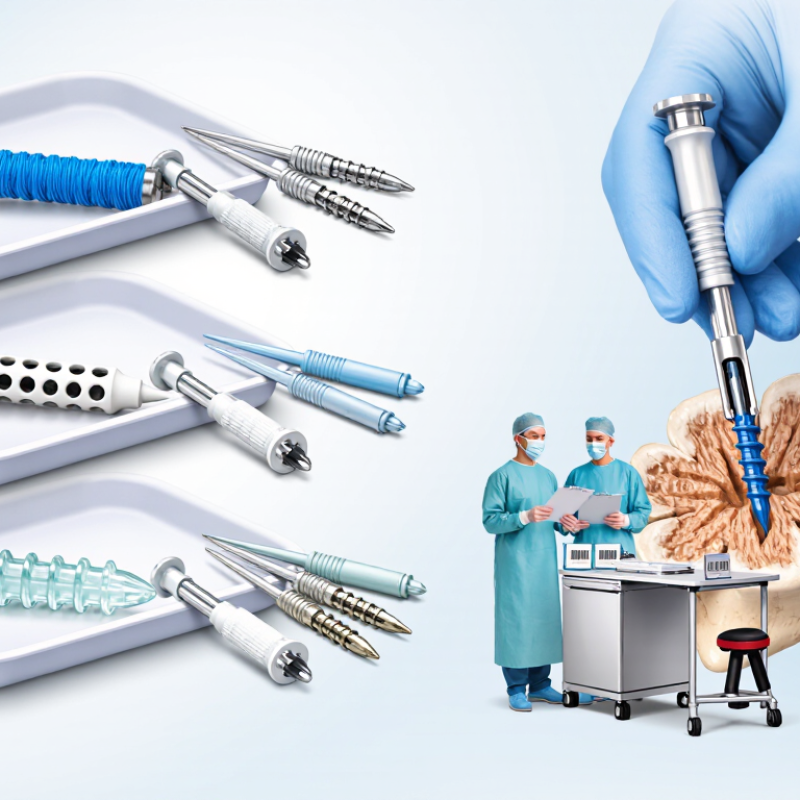
How to Choose the Best Suture Anchor Ankle Supplier?

What Is a Suture Anchor and Why Is It Used in Ankle Surgery?

A suture anchor is a small implant that fixes soft tissue to bone. In ankle surgery, surgeons use it to repair torn ligaments or reattach tendons. The anchor sits inside a prepared bone hole. Sutures then hold the tissue against the healing surface.

This device supports procedures for chronic ankle instability, ligament reconstruction, and selected tendon injuries. It is tiny. Its function is not simple. Anchor design, insertion angle, bone quality, and suture handling can affect fixation. Clinical teams should examine pullout strength, abrasion resistance, MRI conditions, and sterile packaging. A 2024 Grand View Research market report identifies sports injuries and minimally invasive surgery as major drivers of suture anchor demand. The report also forecasts steady market growth through 2030.

Supplier assessment needs more than a product catalogue. Request test methods, material certificates, sterilization validation, complaint records, and lot-level traceability. The supplier should provide reliable surgical instruments and responsive technical training.

According to the FDA’s Medical Device Reporting guidance, manufacturers must maintain systems for identifying and evaluating device complaints. That principle matters during urgent surgical feedback.

No anchor fits every ankle. I have seen how small handling details can influence operating-room confidence. Yet laboratory strength cannot replace biological healing. Supplier claims deserve independent review, not automatic trust. The 2023 AAOS Clinical Practice Guideline process also emphasizes evidence quality and patient-specific decision-making. Choose suppliers that disclose limitations, support surgeon education, and document consistent manufacturing performance.

Which Product Features Matter in an Ankle Suture Anchor Supplier?

How to Choose the Best Suture Anchor Ankle Supplier?

When evaluating an ankle suture anchor supplier, product design deserves close attention. The anchor should provide reliable fixation in different bone qualities and ankle repair situations. Check the material, anchor diameter, thread profile, and available insertion options. These details affect handling during ligament or tendon procedures. A well-designed delivery system should offer controlled placement without excessive force. Small details matter.

Suture performance is equally important. Look for strong pull resistance, secure knot handling, and low fraying during repeated passes. The suture should remain visible and manageable under surgical lighting. Some suppliers provide several suture configurations for different tissue needs. That flexibility can support more precise treatment planning. However, a larger product range is not automatically better. In practical evaluations, unclear sizing information can create unnecessary confusion. Clear instructions, product drawings, and documented testing are more valuable than impressive claims.

Tips: Ask for material specifications, mechanical test data, sterilization information, and lot-level traceability. Review samples with experienced surgeons before routine purchasing. Test insertion control, suture handling, and packaging integrity. Do not overlook training support. Even a reliable anchor may perform poorly when the delivery technique is unfamiliar. Supplier responsiveness also matters when questions arise. A fast reply is useful, but a technically detailed answer is better. Continuous feedback can reveal design weaknesses that initial inspections miss.

How to Evaluate Supplier Quality, Safety, and Regulatory Compliance

How to Choose the Best Suture Anchor Ankle Supplier?

Supplier quality starts with evidence, not promises. The ISO Survey 2022 reported more than 31,000 ISO 13485 certificates worldwide. That number shows market coverage, not automatic competence. Ask for the certificate’s scope, issuing body, expiry date, and manufacturing site. Confirm whether it covers orthopedic implants and sterile packaging. A certificate alone is not proof.

For ankle suture anchors, review pullout testing, insertion torque, fatigue data, and material specifications. Request lot-level traceability for anchors, sutures, and instruments. Packaging should show sterilization method, shelf life, seal testing, and transport validation. FDA’s MAUDE database contains millions of medical-device reports. The agency warns that these reports do not prove causation. Still, complaint trends deserve careful review. A supplier should explain its complaint handling, CAPA process, and recall communication timeline.

Regulatory compliance needs more than a document folder. Check device registration, market authorization, technical files, risk management, and post-market surveillance records for your target region. Review change-control procedures before accepting a sample. In practice, polished paperwork can hide weak traceability. I would audit the factory, inspect retained samples, and compare test records with production lots. Small gaps matter. An unanswered question is data, too. Sources: ISO Survey 2022; U.S. FDA MAUDE Database and Medical Device Reporting guidance.

How to Choose the Best Suture Anchor Ankle Supplier?

Use this evidence-based checklist to compare suppliers. The values show the number of key evidence groups to verify in each area, rather than company-specific performance scores.

Review ISO 13485 quality-system certification, ISO 14971 risk-management records, ISO 10993 biocompatibility evidence, applicable sterilization validation, ISO 11607 packaging validation, lot-level traceability, and market-specific regulatory documentation before approval.

How to Compare Manufacturing Capacity, Customization, and Delivery

Choosing the best suture anchor ankle supplier requires more than comparing catalog prices. Manufacturing capacity must be visible. Ask for monthly molding output, validated equipment, backup machines, and lot-release records. The 2023 ISO Survey reported more than 30,000 ISO 13485 certificates worldwide, so certification alone cannot prove capability. Request audit evidence. Check traceability from resin receipt to final packaging. FDA data recorded more than 1,000 medical-device recalls in 2023, making process control especially important.

Customization should support clinical needs, not create unnecessary complexity. Compare anchor geometry, insertion-tool compatibility, suture configuration, packaging, and labeling controls. Ask whether design changes receive documented risk reviews and verification testing. A supplier should provide pull-out strength data, sterilization validation, aging results, and complaint-trend analysis. Do not accept attractive prototypes without production evidence. That mistake happens.

Delivery performance needs measurable terms. Review the supplier’s 12-month on-time-in-full rate, average production lead time, minimum order quantity, and emergency replenishment process. The Resilinc 2024 Annual Event Watch Report identified thousands of global supply-chain disruptions, showing why one factory location can create avoidable exposure. Ask about safety stock, qualified alternate sources, and business-continuity testing. Set acceptance thresholds in the quality agreement. For example, require lot traceability within one business day and written notice before material changes. Some suppliers may promise faster delivery, but their data can be incomplete. Independent verification remains necessary.

How to Select the Best Supplier Through a Structured Evaluation Process

How to Choose the Best Suture Anchor Ankle Supplier?

Selecting a suture anchor ankle supplier requires a structured evaluation process, not a quick price comparison. Start by defining clinical needs, including anchor size, insertion method, fixation strength, and tissue type. Ask for material specifications, sterilization records, shelf-life data, and lot-level traceability. Reliable suppliers should explain testing methods clearly. Vague answers deserve attention.

Request samples and review them with orthopedic surgeons and operating-room staff. Check thread handling, insertion smoothness, knot security, and packaging clarity. Small details matter. Compare mechanical test results under realistic conditions, rather than accepting isolated headline figures. A supplier with practical clinical experience can often identify problems before they appear during surgery.

Evaluate quality systems, complaint handling, delivery consistency, and technical support. A site audit or video-based quality review may reveal gaps in storage or documentation. Do not choose based on a polished presentation alone. I once underestimated response time because the product sample looked excellent; that decision required later correction. Cost still matters, but unstable supply can create greater operational risk. Document every score, evidence source, and unresolved question before making a final decision.

How to Choose the Best Suture Anchor Ankle Supplier? - How to Select the Best Supplier Through a Structured Evaluation Process

Structured supplier evaluation matrix for ankle suture anchors. Scores should be assigned only after reviewing current, traceable documentation. The weighting model below is a practical procurement benchmark and should be adapted to the destination market, device classification, and hospital requirements.
Evaluation Category Evaluation Dimension Weight Recommended Benchmark or Acceptance Requirement Verification Evidence Priority Score
(0–5)
Regulatory & Quality Quality management system 12% Current ISO 13485 certification issued by an accredited certification body, with the certificate scope covering the relevant medical devices. Certificate, accreditation details, validity dates, audit history, and corrective-action records where available. Critical
Market authorization 10% Valid authorization for the intended market, such as applicable registration, listing, conformity assessment, or clearance requirements. Official registration or listing information, declaration of conformity, device classification rationale, and authorized representative details when required. Critical
Risk management and design controls 6% Documented risk management process aligned with ISO 14971 principles and controlled design-change procedures. Risk management summary, design history documentation, change-control procedure, and verification or validation summaries. Critical
Biocompatibility and material safety 7% Patient-contacting materials must be identified and supported by a biological evaluation appropriate to the duration and type of tissue contact. Material specifications, supplier declarations, biological evaluation, and applicable ISO 10993 test reports. Critical
Product Performance Anchor fixation strength 10% Bench testing should demonstrate pull-out, load-to-failure, cyclic loading, and insertion performance against defined acceptance criteria. Test protocols, laboratory reports, sample sizes, test fixtures, failure modes, and comparison with the product specification. Critical
Suture and eyelet integrity 6% Suture retention, eyelet strength, abrasion resistance, and secure attachment should be verified for the intended surgical technique. Mechanical test reports, suture specifications, inspection criteria, and evidence of performance after simulated use. Critical
Insertion system usability 7% Driver, drill, tap, and anchor interface should support consistent insertion, controlled deployment, and compatibility with the stated technique. Instrument drawings, usability validation, simulated-use results, instructions for use, and surgeon feedback records. Important
Product range and configuration 5% Available sizes, suture configurations, materials, and instrumentation should cover the intended ankle procedures without unnecessary substitutions. Current product catalog, technical drawings, configuration matrix, minimum order quantities, and sample availability. Important
Sterility & Packaging Sterilization validation 8% For sterile products, the sterilization process must be validated and routinely controlled to the applicable standard and claimed sterility assurance level. Sterilization validation summary, routine monitoring records, process parameters, and applicable ISO 11135 or ISO 11137 evidence. Critical
Packaging and shelf-life 7% Packaging should maintain sterility and product integrity throughout the claimed shelf life, transport, and handling conditions. Packaging validation, accelerated or real-time aging data, seal-strength testing, transit testing, and ISO 11607-related documentation. Critical
Labeling and traceability 5% Labels should clearly state size, lot or batch number, expiration date, sterility status, storage conditions, and applicable identification data. Label artwork, UDI or equivalent identification information where applicable, lot-traceability procedure, and sample packaging. Critical
Supply Reliability Capacity and lead time 6% Supplier should provide documented production capacity, standard lead time, safety-stock options, and a realistic emergency replenishment plan. Capacity statement, historical delivery data, production schedule, inventory policy, and written lead-time commitment. Important
Business continuity 4% Critical materials, key processes, equipment maintenance, and alternate production arrangements should be covered by a continuity plan. Business continuity plan, disaster-recovery procedure, critical-supplier controls, and evidence of contingency testing. Important
Complaint and recall responsiveness 4% Documented procedures should define complaint intake, investigation, regulatory reporting, corrective action, and recall communication. Complaint-handling procedure, response-time targets, recall procedure, CAPA records, and post-market surveillance summary. Critical
Commercial & Service Total cost of ownership 5% Evaluate unit price together with instruments, shipping, training, inspection, replacement, storage, and regulatory-support costs. Itemized quotation, freight terms, payment terms, warranty conditions, instrument policy, and five-year cost estimate. Important
Technical and clinical support 3% Supplier should provide responsive technical support, product training, surgical-use documentation, and controlled updates to instructions for use. Support organization chart, response-time commitment, training plan, technical contact details, and document-control process. Important
Total Evaluation Weight 100% Recommended decision rule: reject any supplier that fails a critical regulatory, sterility, traceability, or safety requirement, regardless of its total weighted score.