In today’s competitive business landscape, selecting the right racking solutions is crucial. Efficient storage can significantly enhance operations. Businesses often overlook this aspect, leading to wasted space and resources.
Choosing the best racking solutions involves understanding specific needs. It’s not just about stacking items. Considerations like weight capacity and ease of access are key. Poor choices can create inefficiencies, causing delays in workflows. Each storage environment is unique; a one-size-fits-all approach rarely works.
Investing in quality racking systems can improve reliability and safety. However, many businesses hesitate, worried about upfront costs. This short-sighted view often results in long-term losses. An effective racking solution enhances productivity and helps navigate the complexities of inventory management. It’s a decision that requires careful thought, paying attention to detail and operational demands.

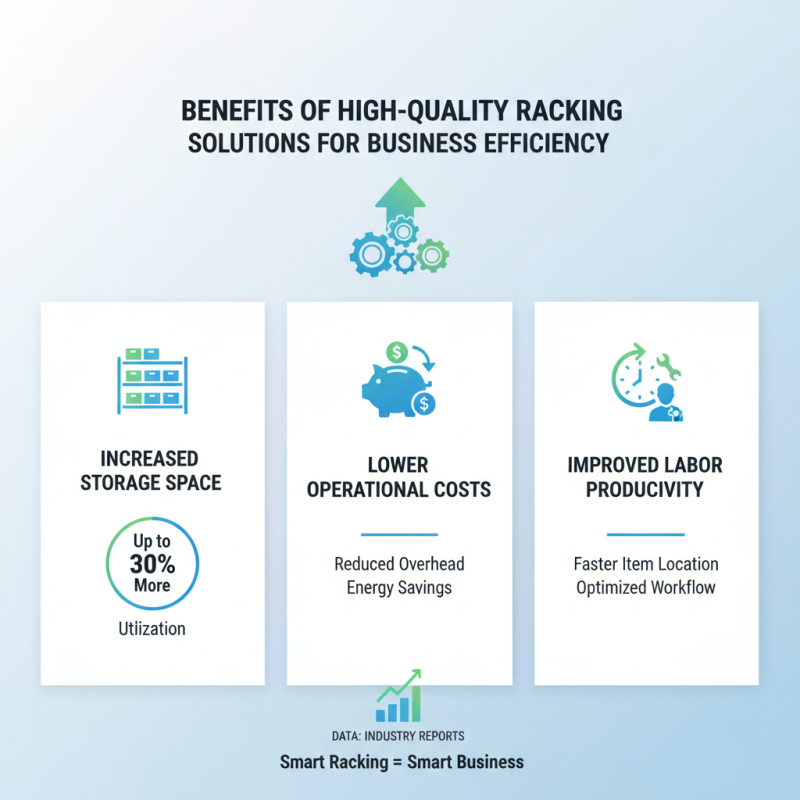
Choosing high-quality racking solutions significantly impacts business efficiency. According to industry reports, efficient racking systems can increase storage space utilization by up to 30%. This efficiency directly translates into lower operational costs and improved labor productivity. A well-organized racking system minimizes time spent locating items, thus enhancing overall workflow.
Tips for maximizing racking efficiency include regularly reviewing storage configurations. Adapt to changing inventory needs by reassessing your layout. Utilizing adjustable racking can accommodate various product sizes, keeping the layout flexible. Additionally, combining different racking types can optimize space and meet diverse storage demands.
It’s worth noting that subpar racking solutions can lead to safety hazards. Poor quality racks may collapse under heavy loads, posing risks to employees and inventory. Investing in high-quality, durable racking solutions is essential. While the initial costs may be higher, the long-term savings and safety benefits clearly outweigh those upfront expenses. Keeping your warehouse organized is not just about aesthetics; it's about maintaining safety and optimizing operations.
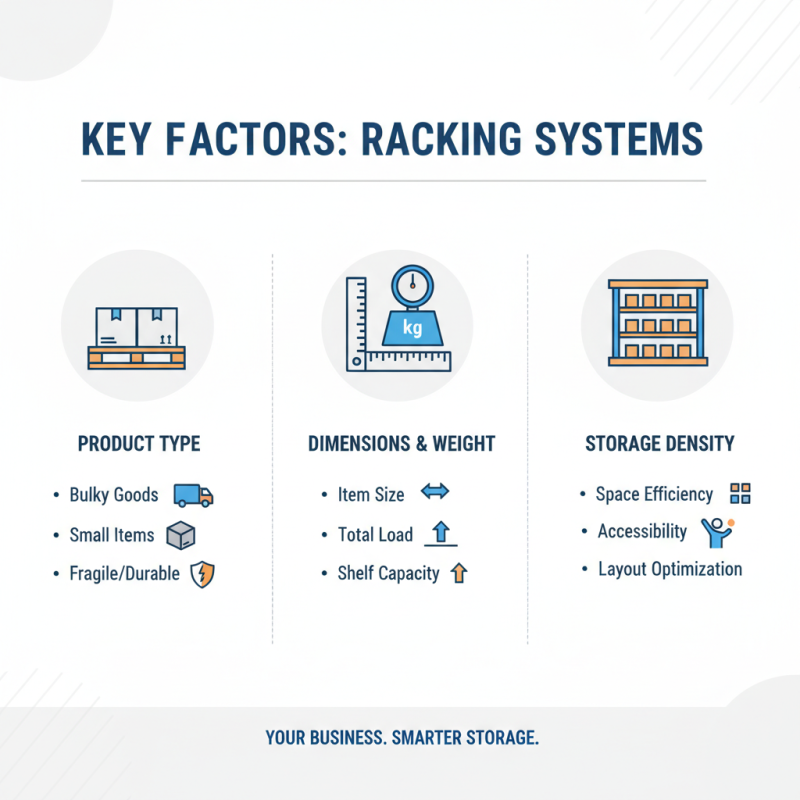
When considering racking systems for your business, several key factors come into play. The type of products stored will largely dictate the design and configuration of your racking solution. Different items require different approaches. For example, bulky products may need heavy-duty racks, while smaller items could fit well on shelving units. Evaluating the dimensions and weight of your inventory helps in making informed decisions.
Space efficiency is crucial. Understanding how to maximize warehouse space can lead to better organization and increased productivity. Measure the available area before selecting racking. An efficient layout allows easy access to items. This ensures that employees spend less time searching and moving around. Additionally, consider the future growth of your business. Investing in scalable racking solutions can save time and money in the long run.
Safety should not be overlooked. Regular inspection and maintenance of racks are essential. Ensuring they meet safety standards protects your staff and inventory. Racking systems can wear out over time. It is vital to check for any signs of damage or overloading. Being proactive can prevent accidents and costly disruptions in your operations.
Racking solutions are essential for various industries. Choosing the right type can significantly enhance efficiency. Common options include selective rack systems, drive-in racks, and pallet flow racks. Each type serves different needs.
Selective racks are great for easy-access storage. They allow direct access to every pallet. This option suits facilities with diverse inventory. On the other hand, drive-in racks maximize storage density. They work well for large quantities of similar products. Meanwhile, pallet flow racks utilize gravity to move pallets. They enhance picking speed and minimize excess handling.
Understanding these systems is crucial. Companies often overlook specific needs, leading to inefficiencies. Selecting an unsuitable racking system can waste space and time. Assessing your inventory and workflow is essential. By considering these factors, businesses can make informed decisions. Proper racking solutions not only save space but also improve safety and organization in warehouses.
| Type of Racking Solution | Applications | Load Capacity (lbs) | Ideal Industries |
|---|---|---|---|
| Selective Pallet Racking | Warehouse storage for large items, easy access | 2,000 - 4,000 | Retail, Manufacturing |
| Drive-In Racking | Storage for high-density products, first-in-last-out | 3,000 - 5,500 | Food Distribution, Beverage |
| Cantilever Racking | Long items storage such as pipes or lumber | 1,500 - 3,000 | Construction, Lumberyards |
| Pallet Flow Racking | High-speed picking for FIFO operations | 2,500 - 4,500 | Pharmaceuticals, Grocery |
| Mobile Racking | Maximizes storage space with movable aisles | 1,000 - 3,000 | Archives, Libraries |
Proper racking solutions can significantly enhance inventory management. When items are organized correctly, retrieval time decreases. Employees find what they need quickly. This efficiency leads to improved productivity. An effective racking system reduces clutter. Less clutter means less time spent searching for products. With clear pathways, safety increases during operations.
Space utilization is another critical factor. Well-designed racking maximizes vertical space. Higher shelves allow for more stored items without expanding the footprint. However, not all racking systems are created equal. Choosing a system that fits your inventory type and workflow is essential. Backup inventory may get overlooked if not organized properly. Poor racking can lead to wasted space and higher costs.
Consider the impact of seasonal changes on inventory. Demand fluctuations require flexible racking solutions. Adaptability is key in managing varying stock levels. Regular assessments may highlight areas needing improvement. Inadequate solutions can hinder growth. Reflecting on current systems can guide future investments.
This bar chart illustrates the significant improvements in space utilization and inventory management efficiency after implementing proper racking solutions in your business. Before racking, space utilization was at 55% with 70% efficiency in inventory management. After adopting effective racking solutions, space utilization increased to 85%, and inventory management efficiency improved to 90%, demonstrating the value of investing in the right racking systems.
Choosing the right racking solutions is essential for any business. Maximizing safety and compliance starts with understanding your space and needs. Proper racking systems help manage inventory effectively. They optimize storage while minimizing hazards. This balance is crucial in busy warehouses or retail environments.
It's important to assess the racking's load capacity regularly. Neglecting this can lead to accidents or injuries. Regular inspections and maintenance are key. Businesses should also train staff on safe practices. Awareness can prevent costly mistakes. Emphasizing a safety-first culture is vital for compliance.
Compliance with safety regulations cannot be overlooked. Noncompliance can result in fines or worse, injuries. By investing in quality racking solutions, companies prioritize safety. Reliable systems also enhance operational efficiency. A thoughtful approach to racking not only protects employees but also boosts productivity. However, remember, there's no one-size-fits-all solution; each space has unique demands.